

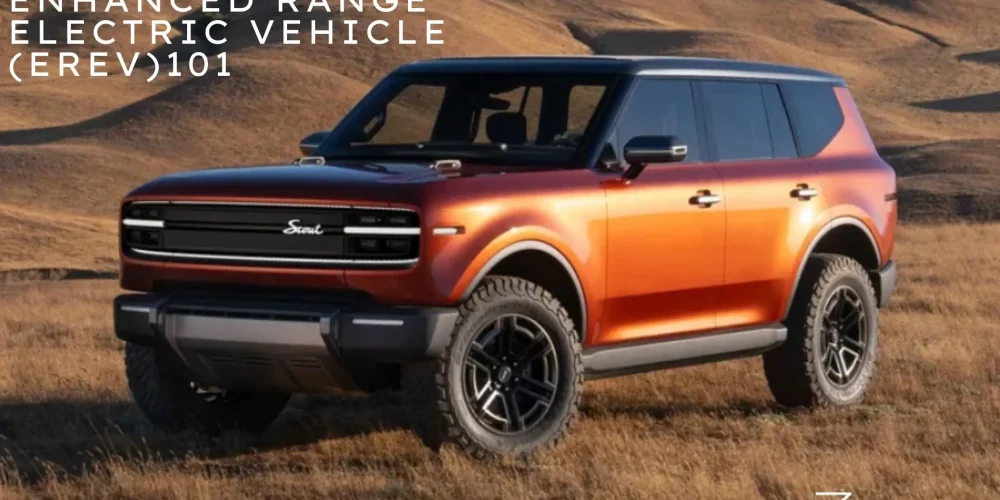
How REEVs (Range Extended Electric Vehicles) Work, Their Benefits, and How They Compare to BEVs and Hybrids
As electric vehicles become more common, new powertrain concepts are emerging to address concerns that still exist around charging availability and driving range. One of these concepts is the Range Extended Electric Vehicle (REEV), sometimes also referred to as Enhanced Range Electric Vehicle (EREV).
REEVs are designed to bridge the gap between fully electric vehicles and gasoline-powered cars. They aim to deliver an electric driving experience while reducing dependence on charging infrastructure, especially on longer trips.
This article explains what REEVs are, how they work, how they differ from other vehicle types, and where they fit into the broader transition toward electrification.
What Is A Range Extended Electric Vehicle (REEV)?
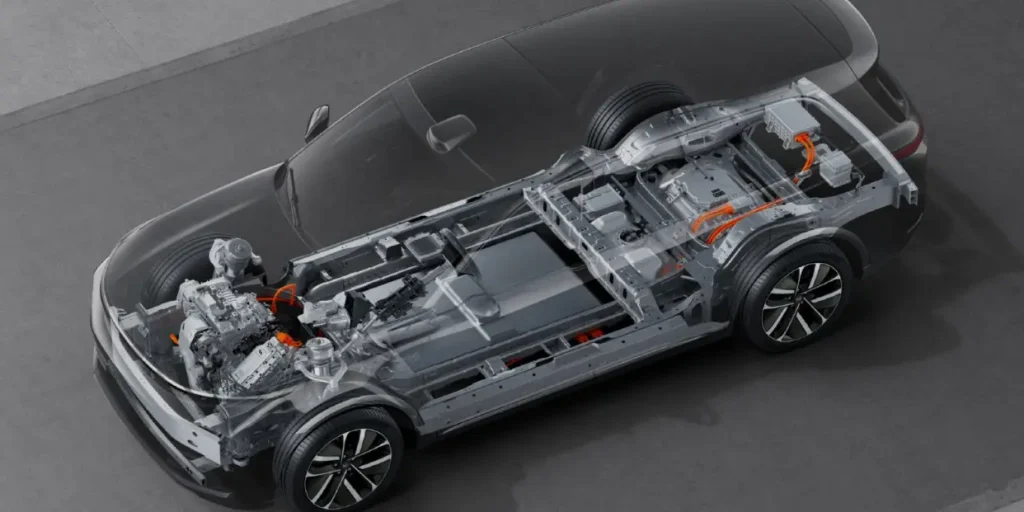
A Range Extended Electric Vehicle (REEV) is an electric vehicle that is primarily powered by an electric motor but includes a small internal combustion engine whose sole purpose is to generate electricity when the battery charge becomes low.
This design is why REEVs are also called Enhanced Range Electric Vehicle (EREV).
The key characteristic of an REEV is that:
● The wheels are always driven by the electric motor
● The gasoline engine never directly powers the wheels
● The gasoline engine is a secondary power source to enhance the vehicle’s range when the batteries drop to a certain percentage
Instead, the engine acts as a generator, producing electricity to extend the vehicle’s driving range when the battery cannot support further electric-only driving.
How Do REEVs Work?
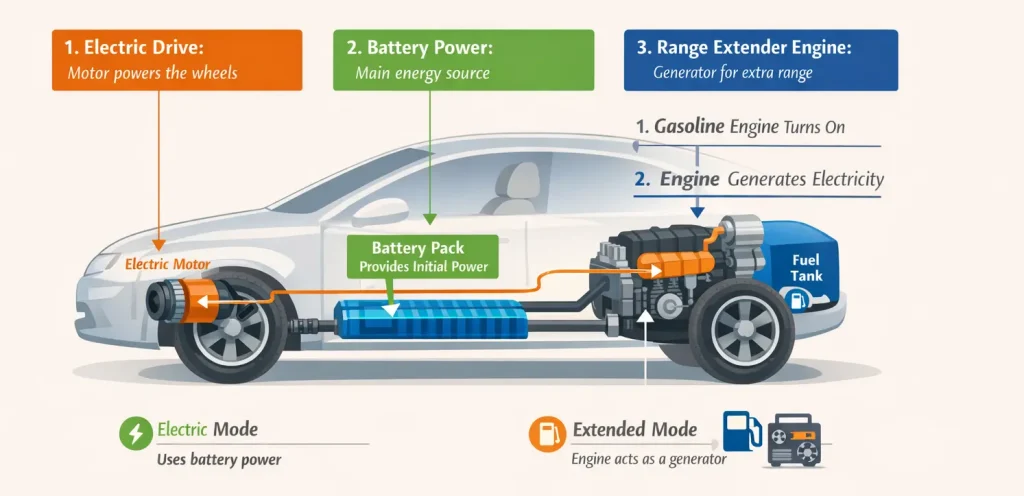
REEVs operate in a battery-first manner, similar to fully electric vehicles, but have a power generator. This powered generator is basically a small engine that uses fuel to produce electricity to charge REEV batteries and provide an extended range.
Primary Electric Operation
● The vehicle starts and operates using energy stored in the battery
● Power is delivered to the wheels through an electric motor
● Electric motors provide a smooth driving experience like any other EV
Role of the Range Extender
● When the battery charge drops below a certain level, the internal combustion engine activates
● The engine generates electricity rather than driving the wheels
● A power generator converts mechanical energy (coming from the engine) into electrical energy
● This electricity either powers the motor directly or maintains battery charge
REEVs vs BEVs vs Hybrid Vehicles
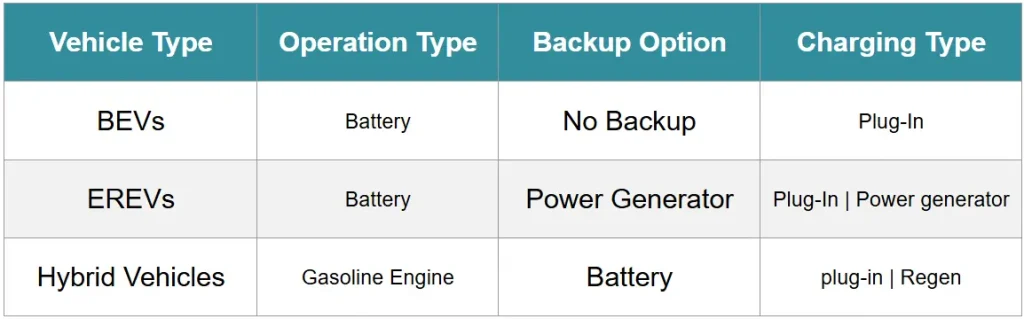
Understanding how Range Extended Electric Vehicle (REEV) differ from other electric vehicles is important, as the terminology is often confusing. In the automotive industry, there are three types of electrified vehicles: REEVs, BEVs, and Hybrid Vehicles.
1: Battery Electric Vehicles (BEVs)
Battery Electric Vehicles, or BEVs, are the most common electric vehicles. which is why BEVs dominate 62% of the total global EV market. BEVs rely entirely on batteries and have no other power source. Meaning if the battery capacity is fully consumed, it can’t go any further without a recharge.
BEVs use 1 or more electric motors as a powertrain. The batteries power these electric motors, and there’s no other source of power to run the powertrain. Being a fully electric vehicle, BEVs produce zero tailpipe emissions on roads.
● Rely entirely on battery power
● Require charging to continue driving
● Produce zero tailpipe emissions during operation
2: Hybrid Electric Vehicles (HEVs)
Hybrid Electric Vehicles, or HEVs, use both a gasoline engine and an electric motor. They do not run only on electricity. The battery is small and is charged automatically while driving, mainly through braking and the engine. Because of this, hybrids do not need to be plugged in. However, some Hybrid cars, called PHEV, come with a plug-in charging option.
In HEVs, the gasoline engine can power the wheels by itself or work together with the electric motor. This helps improve fuel efficiency, especially in city driving. However, hybrids still rely on fuel and cannot drive long distances using electricity alone.
● Use a gasoline engine and an electric motor
● Do not need to be plugged in
● The engine can power the wheels directly
● Use less fuel than regular cars
3: Range Extended Electric Vehicle (REEVs / EREVs)
Range Extended Electric Vehicle, also called REEVs or EREVs, are mainly electric vehicles with a backup system. They are driven by an electric motor, just like BEVs. The main power comes from the battery, but there is also a small gasoline engine to extend the driving range.
This engine does not drive the wheels. It only generates electricity when the battery level gets low. This allows the vehicle to keep running when a charging station is not available, making long trips easier while still offering an electric driving experience.
● Driven by an electric motor
● The battery is the main power source
● A small engine only makes electricity
● Can keep driving when charging is not available
Advantages of Range Extended Electric Vehicle (REEVs)
Range Extended Electric Vehicle (REEVs) offer several practical benefits in certain driving scenarios. Drivers are less dependent on charging infrastructure, particularly in areas where chargers are sparse or unreliable.
Electric Driving Experience
Because the wheels are always driven electrically, REEVs maintain smooth acceleration and consistent driving behavior.
Long-Distance Flexibility
Reducing the range anxiety, the REEVs can complete extended trips without requiring frequent charging stops.
Infrastructure Independence
REEVs reduce reliance on fast chargers, making them suitable for regions with limited EV infrastructure.
Conclusion
Range Extended Electric Vehicle (REEV), also known as Enhanced Range Electric Vehicles (EREVs), represent a practical middle ground between battery electric vehicles and conventional gasoline-powered cars. By prioritizing electric propulsion while retaining a backup energy source, REEVs address many real-world limitations associated with charging access and long-distance travel.
While they are not a replacement for fully electric vehicles, REEVs play a meaningful role in the broader transition toward electrification by offering flexibility where infrastructure or driving habits demand it.
Frequently Asked Questions (FAQ)
What does REEV stand for?
REEV stands for Range Extended Electric Vehicle, a type of electric vehicle that includes a range-extending generator.
Are REEVs the same as hybrids?
No. REEVs are not the same as hybrids. Hybrid cars primarily run on gasoline-powered engines but have electric backup as a secondary power source. While REEVs are powered by electric motors only and have a small engine that only generates electricity to charge the batteries, they never power the wheels directly.
Do REEVs need to be plugged in?
REEVs are designed to be charged like electric vehicles. It can be plugged into a regular charging station (Evse). It charges the same way as a normal EV, but it can continue driving using fuel if charging is unavailable.
Are REEVs better than BEVs?
Neither is universally better. REEVs offer flexibility and reduced charging dependence, while BEVs provide full electrification and zero fuel use.
Do REEVs use gasoline all the time?
REEVs consume fuel only to add extra range by charging up the batteries. If the batteries are charged, then an REEV runs like a normal electric vehicle.
Are REEVs environmentally friendly?
Unlike fully electric vehicles, which produce zero emissions on the road, the REEVs do produce emissions. However, it significantly produces fewer emissions than conventional gasoline-powered vehicles.