

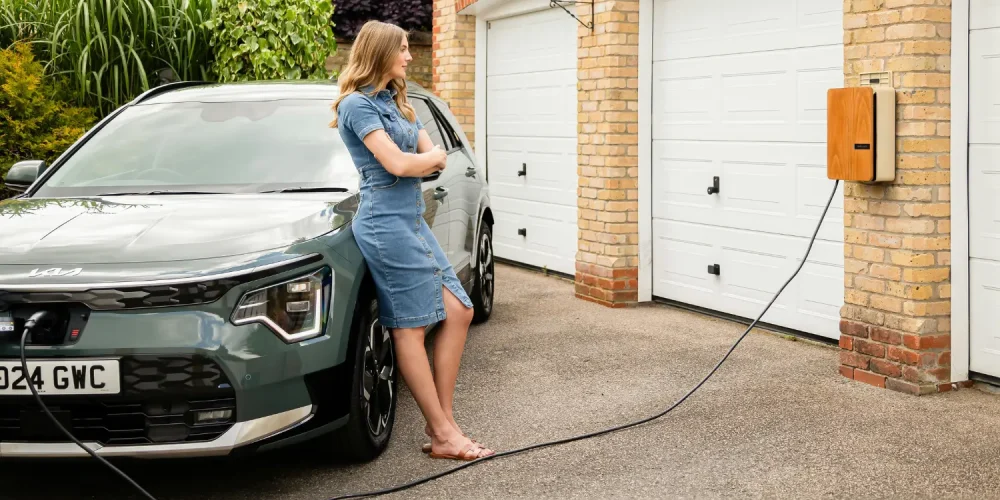
Electricity rates, smart chargers, solar integration, and utility rebates can dramatically reduce your EV charging cost. Here’s how to lower your home charging cost step by step.
It all started with one simple promise — electric cars are cheaper, and cleaner to run. For the most part, that is true. On average, EV owners save about $1,100 per year on fuel compared to gas vehicles, _according to 2025 data from Coltura.
However, reality is a little more complicated. Whilst home charging is generally cheaper than gas, poorly managed habits can quickly increase your EV charging cost, especially when charging habits at home are inefficient.
You might find that your electricity costs are higher than you expected because you are charging at the wrong times or using inefficient hardware, both of which can significantly increase your home charging cost.
So how can you keep your EV charging cost under control?
In this article, we break down the best ways to optimize your charging habits, reduce your EV charging cost, and keep your home charging cost as low as possible.
The Proliferation of Time-of-Use (TOU) Rates
Electricity prices are not static. Most people assume a kilowatt-hour (kWh) costs the same at noon as it does at midnight. That is mistaken. Utilities are increasingly moving toward Time-of-Use (TOU) pricing models. These models reflect the actual cost of generating power during different times of the day.
Peak vs Off-Peak
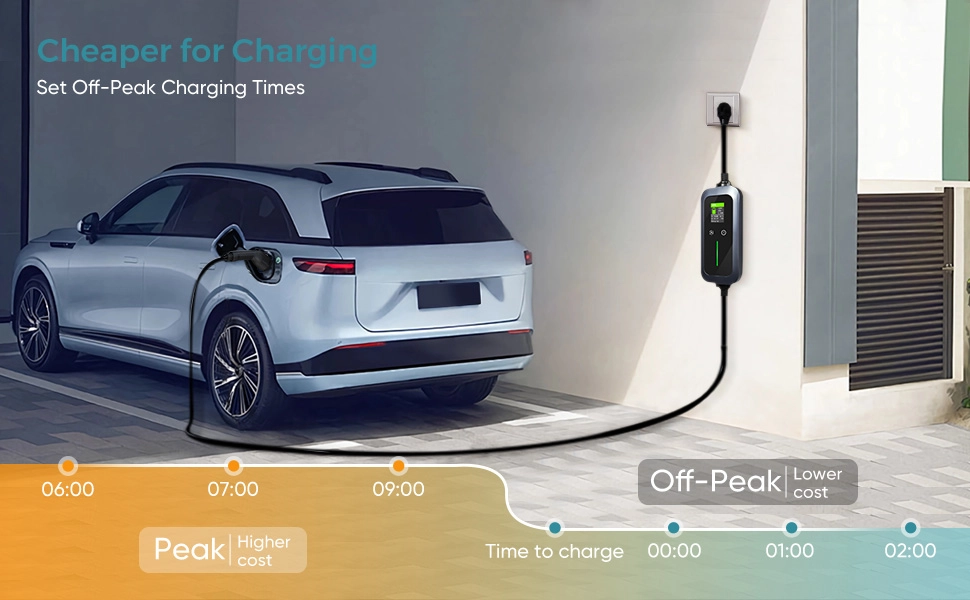
In simple terms, peak hours are when everyone else is using power. This usually happens between 4 PM and 9 PM when people get home, turn on the lights, and start cooking. During these windows, utilities most probably charge 3x the standard rate. If you plug in your car as soon as you get home, you are paying the highest possible price.
Off-peak hours occur when demand is low, typically late at night or early in the morning. By shifting your usage to these windows, you can save a substantial amount of money over time.
Switching to an EV-Specific Tariff
Many providers now offer a “super off-peak” rate specifically for car owners. These plans are designed to encourage overnight charging.
According to data from SolarTech, prices on these specific tariffs can drop to as low as $0.07 to $0.12 per kWh.
Compare that to a standard rate that might be $0.25 or more. The savings are clear. It is safe to say that charging at 2 AM is the single easiest way to sap the high costs from your monthly statement. You should check your utility provider’s website to see if they offer a dedicated EV rate. It is well worth the few minutes it takes to switch.
The Smart vs Dumb Charger Trade-off
You might think any charger will do the job. After all, it just moves electricity from the wall to your car. Nevertheless, the hardware you choose makes a massive difference in your final bill.
Why Automation Matters?
Manually plugging in at midnight is a chore you will eventually skip. You will get tired, or you will forget, and then you will end up charging during a peak window. This is where smart hardware becomes essential.
Duevolt’s home charger features advanced app integration to handle this automatically. You can set precise timers so the car only draws power when the grid is cheapest. You plug it in when you get home, but the charger stays dormant until the off-peak window begins. It removes the need for constant monitoring.
Load Balancing and Efficiency
Modern units do more than just follow a schedule. They can also adjust amperage based on what else is running in your house. This is called load balancing. If your air conditioner and dryer are both running, a smart charger can temporarily throttle back.
This prevents you from tripping the breaker. Better still, it can help you avoid the need for a $4,000 electrical panel upgrade. A crude example would be comparing a manual thermostat to a smart one; one requires constant attention, whereas the other just works.
Solar Panel Integration
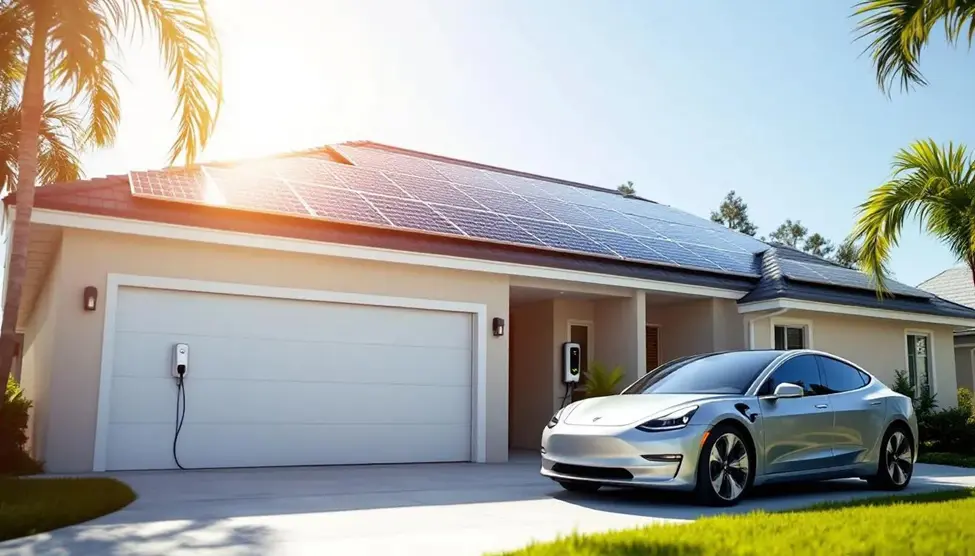
Solar is not just about being green. In fact, it is about price certainty. When you rely on the grid, you are at the mercy of rate hikes and inflation. When you generate your own power, you control the cost.
Direct Solar Charging
By generating your own power, the marginal home charging cost drops significantly. Some estimates suggest it can fall to nearly $0.02 to $0.04 per kWh when you factor in the lifespan of the equipment. That is almost free.
If your charger is integrated with your solar system, it can even prioritize “solar dumping.” This means the charger only uses the excess energy your panels are producing during the day. Instead of selling that power back to the grid for pennies, you are putting it directly into your tank.
Payback Periods and Incentives
The way we look at it, a solar and EV combo typically pays for itself in 6 to 10 years. That might sound like a long time, but consider the alternative. You will likely be driving for the next decade anyway. You might as well own your energy source rather than renting it from the utility.
Hardware and Maintenance
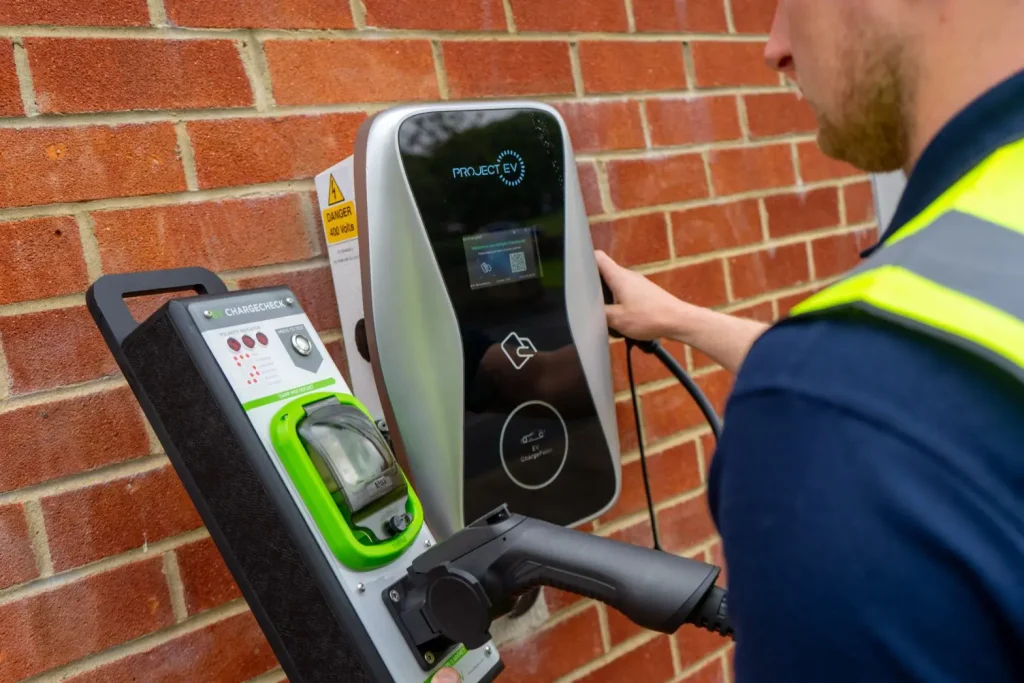
Small technical details sometimes have a monumental impact on your wallet. You should pay attention to how you are charging, not just when.
Level 1 vs. Level 2 Efficiency
Level 1 charging uses a standard 120V household outlet. It is slow, but many people think it saves money because they don’t have to buy a charger. This is mistaken.
Level 1 is actually less efficient because the car has to stay “awake” much longer to get a full charge. When the car is awake, its internal computers and cooling systems are running. This wastes energy. Level 2 is faster and generally wastes less power overall because it completes the cycle quickly.
Battery Health and Charging Limits
Charging to 100% every single night is rarely necessary. Particularly for lithium-ion batteries, staying between 20% and 80% is ideal for longevity.
If you degrade your battery by constantly hitting 100%, you are lowering the resale value of the car. You are also making the car less efficient over time. Most smart chargers allow you to set a limit. Setting it to 80% for daily use is arguably the best move for your long-term budget.
Rebates and Local Incentives
Finding the money is often the hardest part because it is hidden in fine print. Many people ignore utility rebates for the hardware itself.
Utility Rebates
Over 100 utilities in the US offer rebates for installing smart chargers. These rebates range from $250 to $1,000.
For instance, some providers will give you a credit on your bill just for enrolling in a managed charging program. In these programs, the utility might briefly pause your charging during extreme grid emergencies in exchange for a lower monthly rate.
State-Specific Credits
Depending on where you live, you might be eligible for even more. States like California, Massachusetts, and Colorado have additional tax breaks.
The truth is that if you don’t check for these incentives before you buy, you are leaving money on the table. Taking an example from New York, some residents can get a rebate that covers nearly 50% of the installation cost.
Speaking of which, you should always check the Alternative Fuels Data Center to find what applies to your zip code.
Ending Thoughts

Reducing your EV charging cost is not about one big change. Instead, it is about understanding how your home charging cost is calculated and making a series of smarter decisions. It is a mix of smart hardware, better timing, and taking the free money offered by the government.
The way we see it, the proliferation of EVs means the grid is changing. You can either be a victim of those changes or you can use them to your advantage.
Switching to a TOU plan and using a smart charger like Duevolt will put you ahead of the curve.
Check your latest utility bill for a TOU plan today. It is one of the simplest ways to lower your EV charging cost and keep your long‑term home charging cost predictable.