

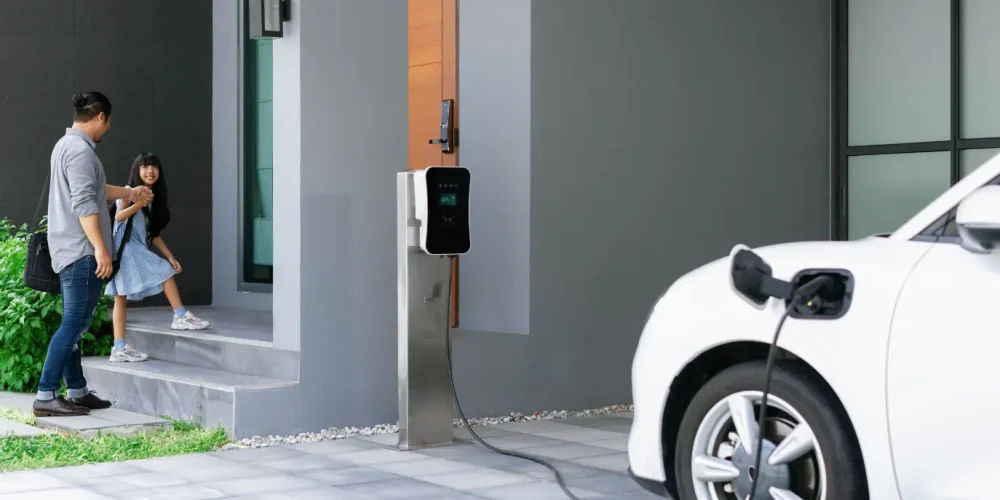
Learn how to set up home EV charging, choose the right charger, and reduce your long-term EV charging cost.
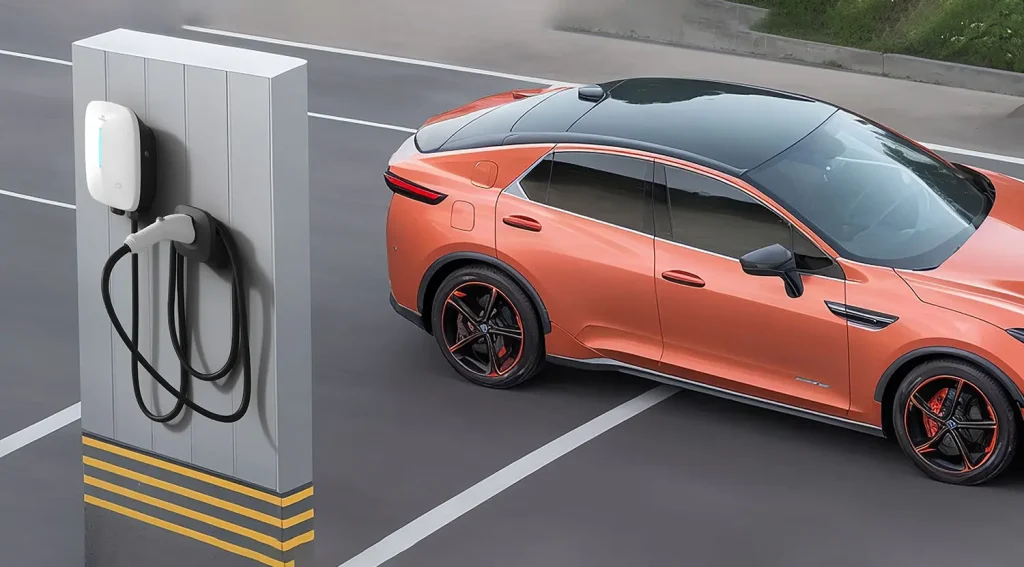
Gone are the days when public stations were the only way to get a fast charge. Home EV charging is now the foundation of a good EV experience. In fact, according to Drive Electric Gov, roughly 80% of electric vehicle charging already happens at home, , making home EV charging the foundation of everyday EV ownership.
This transition, however, requires an initial investment, albeit one that pays off in convenience.
So here’s the question. Would you rather wait two days for a full battery or be done in 8 hours?
If you value your time as much as your range, the answer is obvious.
So let’s break down the specifics…
1. Home EV Charging Levels: Level 1 vs Level 2
Every electric car comes with a basic cable that plugs into a standard 120V wall outlet. This is known as Level 1 charging. It is the bare minimum. And frankly, it is just too slow...
Level 1 adds about 3 to 5 miles of range per hour. In simple terms, filling a standard 60 kWh battery from empty would take over 40 hours.
This works for very short commutes or if you have a plug-in hybrid. Or perhaps you do not have a home charger installed yet and a standard outlet is the only option.
Otherwise, it is simply not feasible.
Level 2 charging, however, is a real solution. The setup requires a 240V dedicated circuit, which of course would cost you initially. But It thwarts range anxiety by providing a full charge overnight.
For instance, a 7.2 kW Level 2 charger fills a 60 kWh battery in about 8 hours, whereas Level 1 would take nearly two days.
| Charging Type | Voltage | Speed | Miles per Hour |
|---|---|---|---|
| Level 1 | 120V | Slow | 3–5 miles |
| Level 2 | 240V | Fast | 20–30 miles |
So would you wait 40 hours for a full battery when you could be done in eight?
Related: Level 1 vs Level 2 Portable EV Charger
2. Selecting Your Home EV Charging Station: Hardware and Features
Hardware choice is the next hurdle. You must decide between a plug-in unit or a hardwired one. A plug-in charger uses a NEMA 14-50 outlet. This provides flexibility. If the unit breaks, you simply unplug it and send it back. Hardwiring is often better still for high-amperage needs, however. It allows for faster charging speeds and offers a cleaner look on your garage wall.
Are smart features well worth the cost?
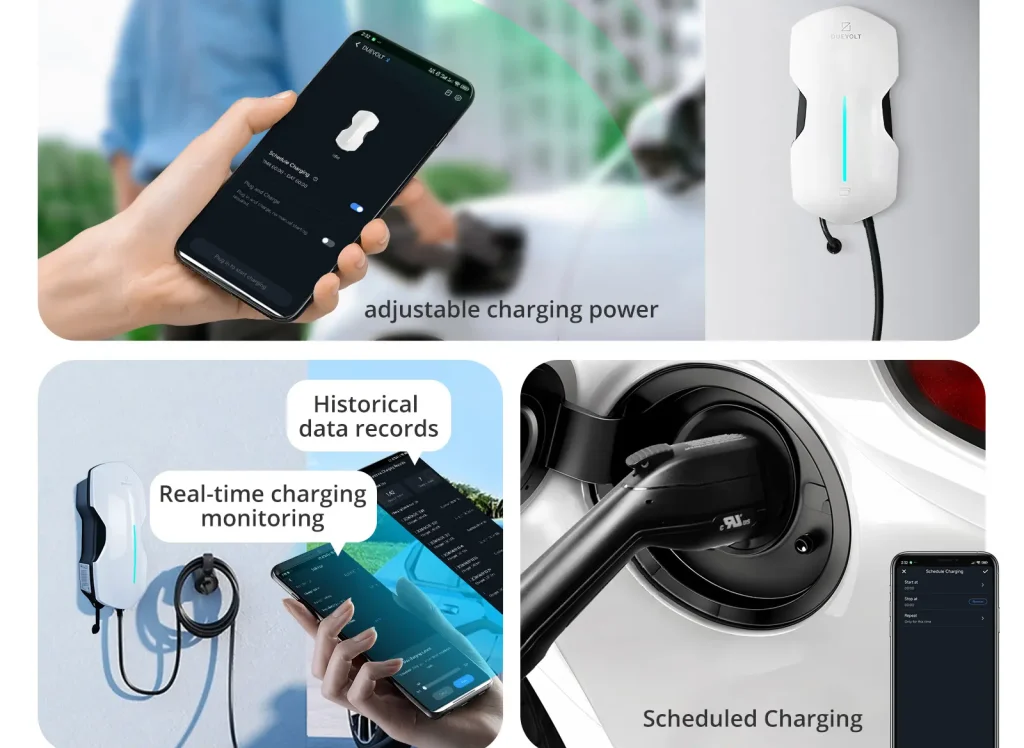
If you want a reliable Level 2 setup, a smart charger like the Duevolt Home Level 2 EV Charger allows scheduling, load balancing, and remote monitoring. This is highly recommended, if your utility provider offers cheaper rates at night. Otherwise, a “dumb” charger is actually the smarter choice if you prefer simplicity. It just works.
Thinking of where you park is vital. If you park outside, ensure the unit is rated for the weather. Most cables are roughly 18 to 25 feet long. A 25-foot cable is generally the gold standard. It ensures you can reach the port regardless of how you pull into the driveway.
3. The Installation Process
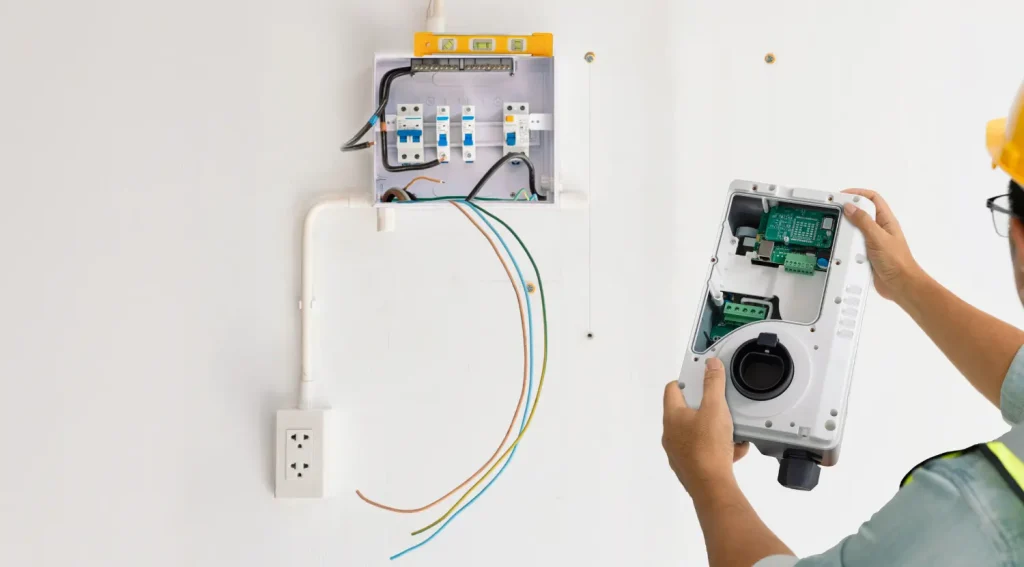
Evaluating your electrical panel is the first step in the installation process. The reality is that many older homes have 100-amp service. This might not be enough to handle a high-power home ev charger on top of everything else. You might need a panel upgrade to 200 amps. That said, some smart chargers use load management to avoid an expensive upgrade.
Finding a qualified electrician is non-negotiable. Please don’t DIY electrical work. A mistake here could lead to a fire or equipment failure.
So how do you find the right pro? Well, get multiple quotes. This prevents you from falling for crude examples of overcharging.
Speaking of which, ensure the electrician is familiar with EV local codes. Permits are a necessity. Being legal ensures your insurance will cover you if anything goes wrong.
For more details please check our article: The Ultimate Guide to EV Charger Installation at Home
4. Cost Breakdown: What Shall You Expect to Pay?
The initial hardware investment for a home ev charger usually falls between $300 and $800. This is the easy part. The labor and materials are where the odds of a high bill increase. The “distance factor” is the main driver of cost. If your panel is right next to your parking spot, the bill will be low. If the electrician has to run conduit across the entire house, costs will climb.
Average installation costs typically range from $500 to $1,500. This brings the total investment to somewhere around $2,000 for most homeowners. That said, incentives and rebates can slash this number. Federal tax credits often cover a portion of the hardware and install. Many utility companies also offer kickbacks. You should check your local programs to ensure you don’t leave money on the table.
To have more detailed information about home ev charging installation cost please refer to : Level 2 EV Charger Installation Cost: What to Expect at Home
5. Daily Habits: Living with Home EV Charging
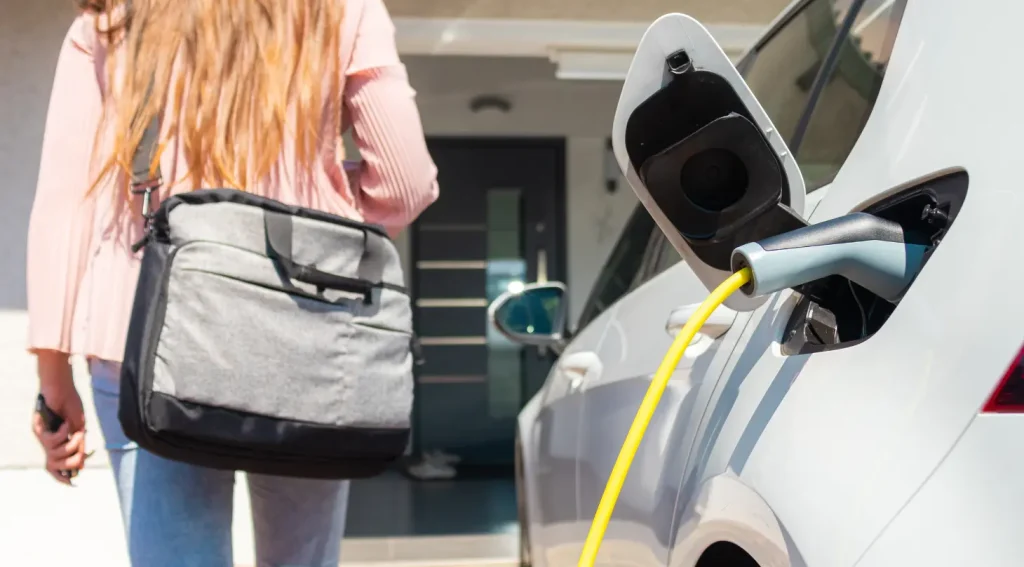
Living with an EV requires a few new habits. Take the 80/20 rule, for instance. You probably shouldn’t charge to 100% every night. Keeping the battery between 20% and 80% extends its life. Charging to the max is fine for road trips, but for daily use, it is somewhat unnecessary.
Off-peak charging is another simple win. Most people save money while they sleep by setting the car to start at midnight. This helps the grid as a whole by reducing demand during the day. Maintenance is also quite simple. Periodically inspect the cable for wear and tear. Ensure the connections remain tight over the years. This is a low-effort way to maintain safety.
6. Home vs Public Charging
The cost per mile at home is substantially lower than at public stations. Residential rates are stable. Public station markups, however, can be aggressive. You might pay three times more at a fast charger than you would at your own house.
Then there is the time factor. Home charging eliminates the “wait.” You never have to sit in a parking lot for forty minutes while your car juices up. Level 2 charging is also gentler on your battery. Frequent DC fast charging can lead to early degradation. Home charging is better for the vehicle in the long run.
Ending Thoughts
Home EV charging is the foundation of a good EV experience. It removes the friction of going electric.
Having said that, the upfront cost is an investment in long-term convenience. It pays for itself in time saved and lower fuel costs.
Start with a simple consultation with an electrician to see if your home is ready. The transition is well worth the effort.
Frequently Asked Questions (FAQs)
What is Home EV Charging?
Home EV charging refers to charging an electric vehicle at a residential property using either a Level 1 or Level 2 charging setup. Most EV owners install a Level 2 charger connected to a 240-volt circuit to enable faster overnight charging.
Can I charge my EV with a regular wall outlet?
Yes, but it is painfully slow. It takes about 24 hours to add 100 miles of range. Level 1 is better than nothing, but most people find it inadequate for daily driving.
How much will my monthly electric bill increase?
If you drive 1,000 miles a month, you might see an increase of $30 to $50. This depends on your local utility rates. It is still much cheaper than gas.
Is it safe to charge in the rain?
Certainly. Modern home ev chargers are designed with multiple safety layers. The electricity does not flow until a digital “handshake” occurs between the car and the charger.
Do I need a specific brand of charger for my car?
No. Most chargers use the J1772 standard. Even Teslas can use these with a simple adapter. The proliferation of NACS ports means compatibility is becoming even easier.
What happens if the power goes out?
The car simply stops charging. It is the same as any other appliance. Once power returns, most chargers will automatically resume.