
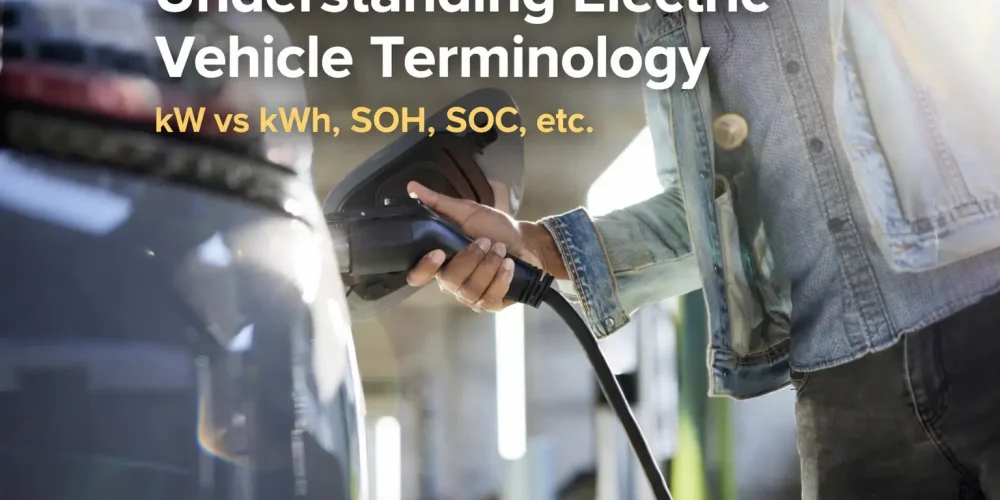
A simple breakdown of EV charging terminology to help new drivers understand how EV charging works.
Understanding EV charging terms is the first step to using your electric vehicle confidently. This guide breaks down the most important terms in simple language.
If you’re new to electric vehicles (EVs), the language around charging can feel confusing at first. Every time you look up a charger or read your vehicle’s dashboard, you’ll see terms like kW, kWh, SOC, Level 1, Level 2, DC/AC charge, and SOH. These are common EV charging terms, and understanding them can make charging your car easier and less stressful.
This guide explains the most important EV charging terms in plain language so new drivers can feel confident on the road and at charging stations.
What Does “EV Charging” Really Mean?

When we talk about EV charging, we’re talking about putting electric energy into a vehicle’s battery so it can drive. It’s similar to charging your phone, but on a bigger scale. Instead of plugging a cable into a wall for your phone, you connect a charger to your EV, and electricity flows into the battery.
Charging has two important measurements you’ll see a lot: power and energy. These terms help you understand how fast your EV charges and how much energy it holds. The most common terms you’ll encounter include kW, kWh, State of Charge (SOC), and State of Health (SOH).
kW vs kWh: What’s the Difference?
Two of the most common EV charging terms are kW and kWh, and many new drivers mix them up. Both terms look similar, but knowing the difference means a lot.
What is kW?
kW, or kilowatt, measures power. In the context of EV charging, it tells you how much electricity is flowing from the charger into the car’s battery. Just like the phone chargers, the EV chargers come with different power ratings.
● A charger with higher kW can often charge your EV faster
● Chargers at home are usually lower kW
● Public fast chargers have higher kW
What is kWh?
kWh, or kilowatt-hour, measures energy, and it tells you how much electricity the battery can store. The higher the kWh, the more energy a battery can store. Knowing the term kWh helps a lot, especially when you are looking for an EV to purchase. A 50 kWh battery would store less energy and give less range than a 90 kWh battery.
● Your EV’s battery size is listed in kWh
● More kWh usually means more driving range
● A 60 kWh battery can deliver more distance than a 40 kWh battery
Simple Example
If you use a charger rated at 50 kW, it can send 50 kilowatts of power into your battery at one moment. If you plug in for an hour at 50 kW, you’d add up to 50 kWh of energy (minus some loss).
Understanding kW vs kWh helps you know both how fast your EV can charge and how much distance you can gain from charging.
SOC: State of Charge | Your Battery Level |
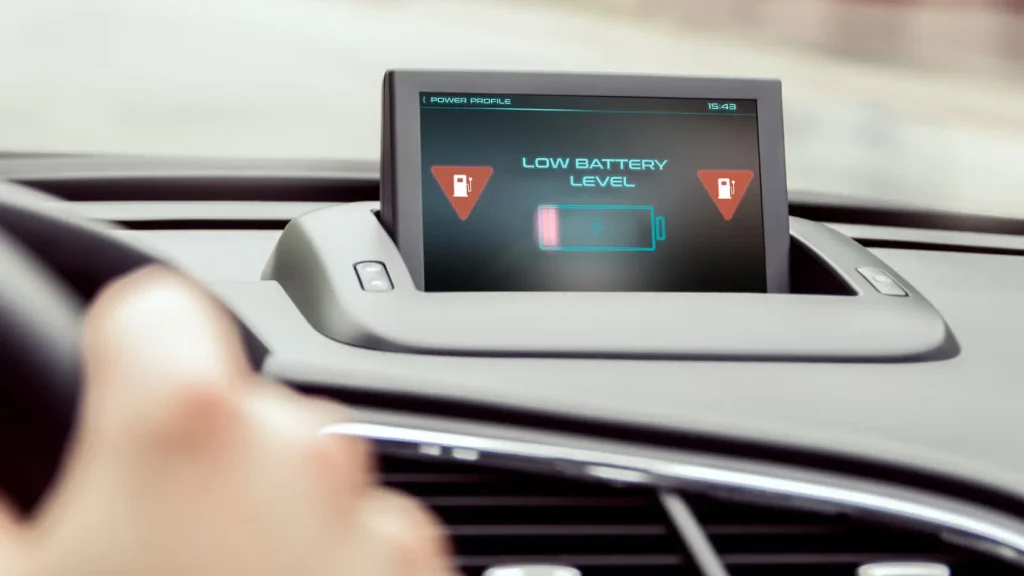
SOC stands for State of Charge. This is one of the most practical EV charging terms you’ll use regularly. Think of SOC like the fuel gauge of a gasoline car. The SOC tells you how much your battery is charged, just like a phone’s battery percentage.
● SOC 0% means the battery is empty
● SOC 100% means the battery is fully charged
SOC changes every time you drive, stop, or charge. Your EV’s display updates in real time to show how much energy is left in the battery.
SOH: State of Health | Long-Term Battery Condition
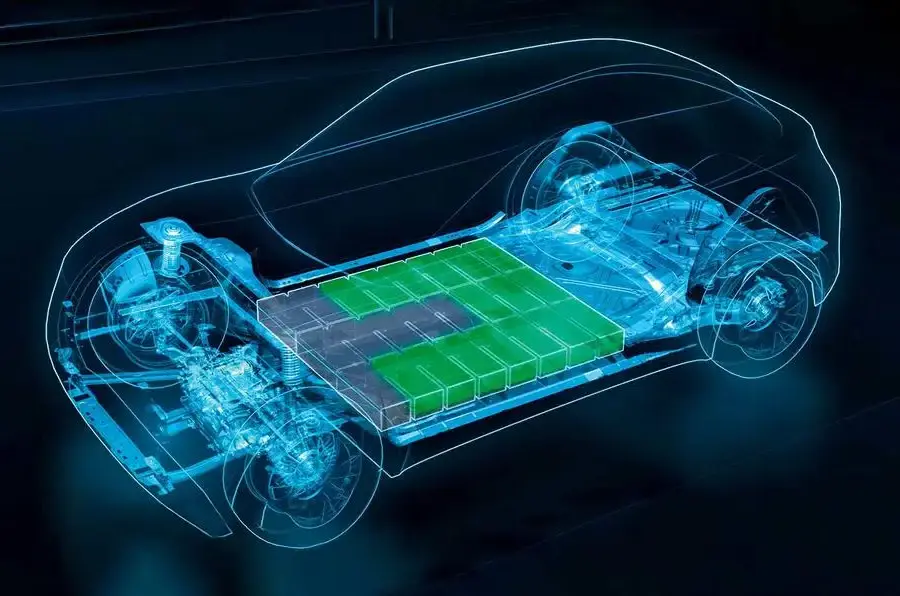
SOH means State of Health. While SOC tells you how full the battery is right now, SOH tells you how healthy the battery is overall. As your EV ages, the battery naturally wears down a little with each charge cycle. This reduces how much total energy it can hold compared to when it was new.
SOH is usually shown as a percentage. If an EV battery had an original capacity of 100 kWh and its SOH is reported at 90%, that means the battery can now hold about 90 kWh of energy compared to new.
SOH is a useful metric when considering a used EV or tracking long-term battery performance. Unlike SOC, which changes from hour to hour, SOH changes gradually over months and years as the battery ages.
Other Common EV Charging Terms New Drivers Should Know
As you use an EV more often, you’ll come across several other useful terms that help describe the charging process:
Charging Levels
● Level 1 Charging: Uses a standard household outlet that operates on 120v. Slow but convenient for overnight home charging.
● Level 2 Charging: Uses a dedicated charger with higher power that operates on (240v). It is faster than Level 1 and common in homes and public places.
● DC Fast Charging: High-speed chargers run on DC power. These chargers are typically located along highways or public stations. DC charging delivers power quickly and reduces charging time significantly.
● RPH (miles of range per hour): RPH indicates the number of estimated miles you add per hour during charging.
Voltage and Amperage
● Voltage (V) refers to electrical “pressure”, which affects how quickly a charger can transfer power.
● Amps (A) is like the volume of that electrical flow.
Together, voltage and amps help determine total charging power in kW.
Charging Speed and Charging Curve
Your EV charges fastest when the battery is low — and slows down as it gets fuller. This pattern is called the charging curve, and it’s a normal part of how modern EV batteries stay healthy for a long time.
Regenerative Braking
Many EVs can capture energy when slowing down or braking and return that energy to the battery. This helps slightly extend the range and reduce how often you need to plug in.
Charging Components and Related Terms:
Connector/Plug
A physical plug that connects the EV to the charging station or power outlet. Different types of connectors are being used in EVs (NACS, CCS, or CHAdeMO).
EVSE
EVSE (Electric Vehicle Supply Equipment) is a term that is used for the charging unit.
Onboard Charger
An onboard charger built into the EV that manages the electricity coming through the charging cable.
Real-World Example: Using EV Charging Terms at a Station
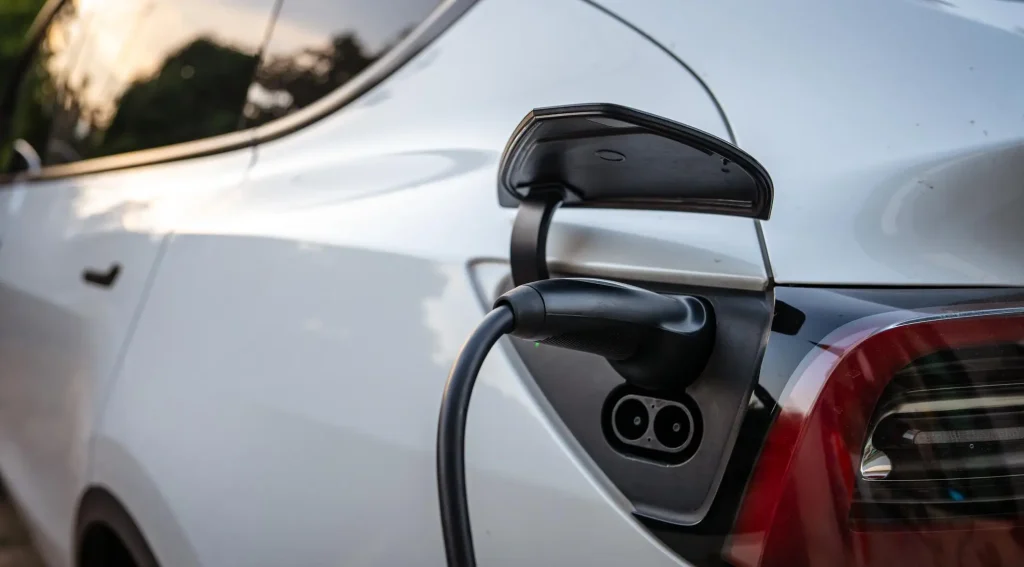
When you arrive at a public charging station, you might see options like 50 kW or 150 kW chargers. If you understand EV charging terms, you’ll know that higher kW means faster charging.
Your dashboard will show SOC, helping you decide how long to stay plugged in. As the battery fills, the charging speed may slow down due to the charging curve.
How Understanding These Terms Helps You
Learning common EV charging terms makes everyday driving easier. You’ll be more confident reading:
● Charging station screens
● Your EV’s dashboard displays
● Charging apps and trip planners
If you know the difference between kW vs kWh, you’ll understand how fast a charger can fill your battery and how much energy it adds. Knowing SOC helps you plan trips and charging stops. Understanding SOH gives insight into long-term battery health when buying or selling an EV.
Most importantly, this knowledge helps remove anxiety about charging and makes everyday use feel familiar and intuitive.
Conclusion
Charging an electric vehicle is different from filling a gas tank, but once you learn a few key terms, it becomes easy. Words like kW vs kWh, SOC, and SOH might feel technical at first, but they simply describe how your battery stores and receives energy.
As you spend more time with your EV, these terms will become second nature. For now, remember that:
● kW tells you how fast you’re charging
● kWh tells you how much energy you have
● SOC tells you how full the battery is now
● SOH tells you how healthy the battery is over time
Start with these basics, and you’ll feel confident using any EV charging station, whether at home or on the road.