
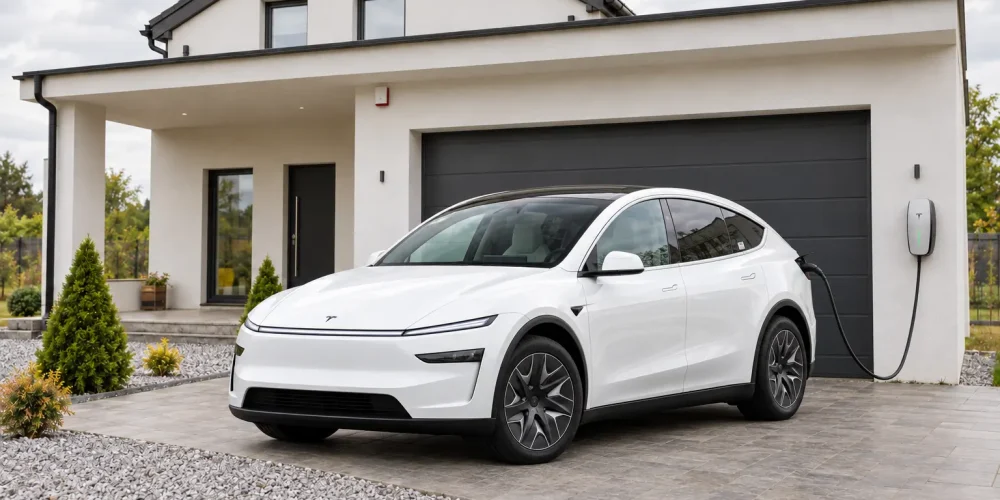
Tesla’s Model Y L gives American buyers something the familiar Model Y could only partially deliver: more room for passengers across three rows. Its longer wheelbase and six-seat layout bring a different kind of practicality to Tesla’s bestselling SUV, particularly for families who regularly travel with more than four people.
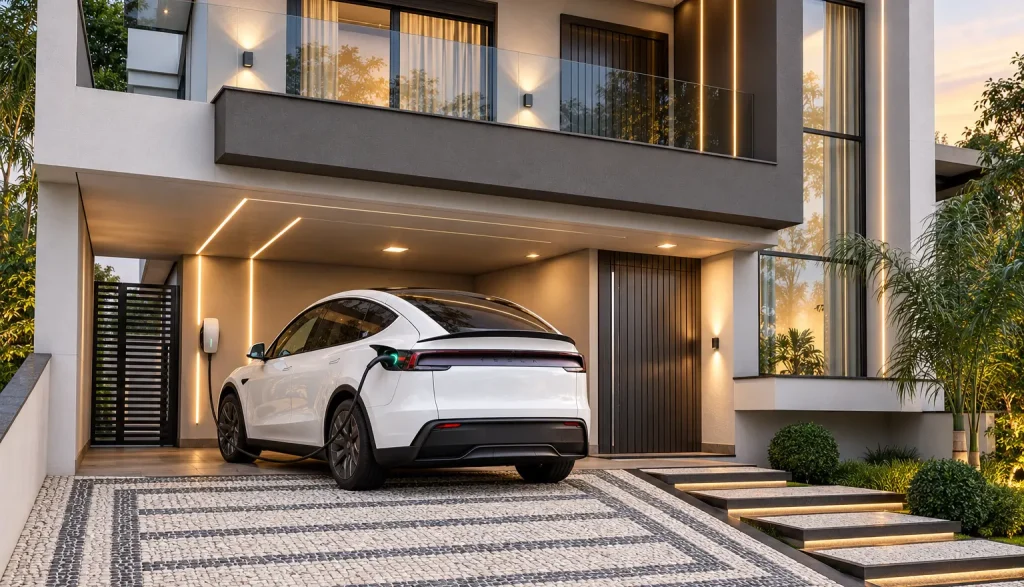
Tesla opened U.S. orders on July 2, 2026, introducing the Model Y L Premium Launch Series at $61,990 before destination, order fees, taxes, and other charges. Including destination and order fees, the listed price comes to $63,630 before taxes and other fees. U.S. launch report, Tesla pricing and offers
There is also an incentive for early buyers: Tesla’s current Launch Series package includes one year of free Supercharging, alongside other included benefits. That can make the first year of road trips less expensive, although eligibility and the offer’s terms should be confirmed when ordering. The benefit applies to qualifying Tesla Supercharging sessions rather than home electricity or every public charging network. Tesla Launch Series offer
Once the purchase decision is made, the everyday question is simpler: how will you keep it charged?
Understanding how to charge Tesla Model Y L means looking beyond the biggest number on a charger. Home charging is about replacing the miles you drive each day. Fast charging is about adding enough energy to continue a journey without spending unnecessary time at a station. This guide covers both, including Model Y L charging speed, equipment choices, charging times, and costs.
1. Tesla Model Y L Charging Specifications
Tesla currently lists the U.S. Model Y L Premium with dual-motor all-wheel drive, seating for six, up to 332 miles of EPA-estimated range, and a maximum Supercharging rate of 250 kW. It also advertises up to 172 miles added in 15 minutes under specified conditions. Actual range and charging performance vary with configuration and operating conditions. Tesla Model Y L specifications
For the charging calculations in this guide, we use the following assumptions:
| Item | Value used |
|---|---|
| Battery energy for calculations | 83 kWh |
| Driving energy consumption | 30 kWh per 100 miles |
| AC charging efficiency | 85% |
| Mobile Connector output at 240V/32A | 7.68 kW |
| Compatible plug-in charger output at 240V/40A | 9.6 kW |
| Compatible hardwired charger output at 240V/48A | 11.52 kW |
The 83 kWh figure is a calculation assumption rather than a confirmed Tesla U.S. usable-battery specification. The 30 kWh/100-mile figure is an illustrative driving-consumption assumption, separate from Tesla’s advertised range. The 48A examples require a vehicle that accepts 48A AC; confirm the limit for your specific vehicle.
Why Home Charging and Fast Charging Have Different Limits
At home, electricity reaches the vehicle as AC power. The onboard charger converts it into DC energy for storage in the battery. Charging speed therefore depends on the electrical supply, charging equipment, and the onboard charger’s capacity.
A DC fast charger performs that conversion outside the vehicle, bypassing the onboard AC charger. Its much higher output makes it useful during a journey, while the battery’s charging limits determine how much of that power the vehicle can accept. DOE-hosted charging technical report
2. Model Y L Charging Speed at Home
For most owners, charging will happen while the car is parked overnight. That changes the buying calculation: the most useful charger is the one that restores your daily mileage within your available parking time.
A portable charger may already provide everything you need. A faster hardwired installation becomes more attractive if you cover longer distances or want to concentrate charging into a short, inexpensive overnight window.
Based on the data disclosed by fueleconomy, the estimated electricity comsumption of Tesla Model Y L is 30 kWh/100 mi.
Home Charging Times at a Glance
| Charging setup | Voltage and current | Input power | Estimated range added per hour | Estimated 10–80% time | Estimated 0–100% time |
|---|---|---|---|---|---|
| Level 1, NEMA 5-15 | 120V, 12A | 1.44 kW | 4.1 miles | 47.5 hours | 67.8 hours |
| Tesla Mobile Connector, NEMA 14-50 | 240V, 32A | 7.68 kW | 21.8 miles | 8.9 hours | 12.7 hours |
| Compatible Level 2 charger, NEMA 14-50 | 240V, 40A | 9.6 kW | 27.2 miles | 7.1 hours | 10.2 hours |
| Compatible hardwired Level 2 charger | 240V, 48A | 11.52 kW | 32.6 miles | 5.9 hours | 8.5 hours |
Calculated using the assumptions above. These are planning estimates rather than measured Model Y L results. Temperature, voltage, battery conditioning, and charging behavior near full capacity can change the outcome.
Level 1: A Useful Backup for Light Driving
A standard NEMA 5-15 household outlet supplies 120V and supports 12A continuous EV charging, producing approximately 1.44 kW. A 16A charging setup requires a suitable 20A circuit and compatible equipment. Tesla distinguishes these configurations in its adapter specifications. Tesla Mobile Connector specifications
Using our assumptions, a standard outlet adds about 4.1 miles per hour. Replacing 30 miles of driving takes roughly 7.4 hours.
That can be sufficient for someone with a short commute and a long overnight parking period. For a busy family SUV covering school runs, commuting, and evening activities, however, 240V charging provides considerably more flexibility.
Tesla Mobile Connector: A Straightforward Starting Point
For buyers whose delivery includes Tesla’s Mobile Connector, the supplied portable unit is a practical place to start. Confirm the equipment included with your order before purchasing anything additional.
With a suitable NEMA 14-50 outlet and the correct adapter, the current Mobile Connector delivers up to 32A at 240V, or 7.68 kW. Its own output limit remains 32A even when connected to a 50A circuit. Tesla Mobile Connector
In this guide’s calculation scenario, that translates to approximately 21.8 miles added per hour. Restoring 100 miles takes about 4.6 hours, easily fitting within a typical overnight stay.
A near-empty battery takes much longer to replenish, but most owners will be replacing a day’s driving rather than charging from zero each evening.
Third-Party Portable Chargers Offer Another Option
Tesla’s portable unit is one of several ways to charge from a suitable household outlet. Third-party Level 1 and Level 2 portable chargers can also serve as a primary home charging solution or travel companion, provided their connector, electrical ratings, and installation requirements match the vehicle and available circuit.
One example is the Level 1 & Level 2 Portable EV Charger for Tesla and NACS. According to the specifications, the NACS version connects directly to a compatible Tesla charging port and supports:
- Up to 40A and 9.6 kW through its NEMA 14-50 connection at 240V.
- 120V charging with the included NEMA 5-15 adapter.
- Adjustable current settings from 6A to 40A.
For an owner with a properly installed 50A circuit, the 40A Level 2 setting offers more output than Tesla’s 32A Mobile Connector. Under our assumptions, charging speed rises to approximately 27.2 miles per hour, reducing the time to replace 100 miles to about 3.7 hours.
The maximum setting belongs to the appropriate 240V installation. When using a standard 120V household outlet, follow the adapter instructions and the circuit’s lower current limit.
Why a NEMA 14-50 Plug-In Charger Stops at 40A
Amperage claims deserve a close look when comparing home chargers.
In a conventional U.S. residential installation, a 50A circuit supports 40A continuous EV charging. At 240V, that produces 9.6 kW. A NEMA 14-50 receptacle installed on a lower-rated circuit requires a correspondingly lower charging setting.
A product advertised as a “48A charger” may reach that output only when hardwired. ChargePoint’s Home Flex installation guidance, for example, specifies 32A or 40A for its plug-in configurations and requires hardwiring for higher outputs. ChargePoint installation guidance
Check the rating for the installation method you will actually use. A prominent 48A claim does not establish that a charger can deliver 48A continuously through a NEMA 14-50 plug.
Hardwired Charging: More Output for Demanding Schedules
A compatible hardwired charger operating at 240V and 48A supplies 11.52 kW, usually rounded to 11.5 kW.
Tesla’s U.S. Wall Connector supports that output on an appropriate 60A circuit. The vehicle must also accept 48A AC, so check your Model Y L’s charging-current limit before paying for the higher-capacity installation. Tesla Wall Connector specifications
With our assumptions, a 48A setup adds approximately 32.6 miles per hour and charges the assumed 83 kWh battery from 10% to 80% in about 5.9 hours.
The benefit is most apparent when you return home with a low battery and need an early departure. For lighter daily use, a 32A or 40A installation may already provide ample capacity.
Have a qualified electrician assess the home’s available electrical capacity, circuit design, wiring, and installation requirements. Whether the home needs wider electrical upgrades depends on its existing equipment and load calculation.
3. How to Charge Tesla Model Y L at Home
Once the equipment is in place, charging should become an ordinary part of parking.
- Position the car within cable reach. Leave enough slack for the connector to reach comfortably.
- Open the charge port. Use the charging-handle button, touchscreen, or Tesla app.
- Insert the connector fully. Allow the vehicle to recognize the connection.
- Check the charging status. A flashing green charge-port light indicates that charging is underway.
- Set the charge limit and schedule. Use the vehicle’s recommended daily limit and choose a suitable charging window.
- Stop charging and release the connector before removal. Follow the vehicle’s prompts if it remains locked.
If the car is connected but waiting, check whether a charging schedule is active. A scheduled session may begin later rather than immediately after plugging in. Tesla charging instructions
4. Model Y L Charging Speed at Public Stations
Public charging serves two different needs. Level 2 AC stations can add energy while you work, shop, or stay overnight. DC fast chargers are better suited to shorter stops during a journey.
Connector compatibility is the first thing to establish.
| Charging connection | What owners should check |
|---|---|
| Compatible Tesla/NACS AC connector | Vehicle and station compatibility |
| J1772 AC connector | A compatible J1772-to-Tesla AC adapter |
| Tesla Supercharger | Available output, stall availability, and pricing |
| Third-party CCS1 DC connector | Vehicle CCS support and a suitable CCS1-to-NACS DC adapter |
| Third-party NACS DC connector | Network support and activation requirements |
AC adapters and DC fast-charging adapters perform different jobs. For CCS1 charging, Tesla advises checking vehicle compatibility in the Tesla app and arranging a retrofit where necessary. Tesla CCS1-to-NACS adapter
What to Expect at a V3 or V4 Supercharger
A suitable V3 or V4 Supercharger can provide charging up to the Model Y L’s published 250 kW vehicle limit when conditions allow. A higher station rating does not increase the vehicle’s maximum acceptance rate.
The number on the screen will change throughout the stop. State of charge, battery temperature, vehicle configuration, and station conditions all affect the power delivered. Tesla also notes that reaching 100% generally takes substantially longer than reaching 80%. Tesla Supercharging guidance
Peak Power Does Not Tell You the Whole Charging Time
A 250 kW peak is a useful headline, but average power determines how long you remain plugged in.
Using the assumed 83 kWh battery, charging from 10% to 80% adds approximately 58.1 kWh. Here is how different average power levels would affect that session:
| Illustrative average power reaching the battery | Calculated 10–80% time |
|---|---|
| 100 kW | 34.9 minutes |
| 125 kW | 27.9 minutes |
| 150 kW | 23.2 minutes |
These are mathematical scenarios, not measured Model Y L results or a guaranteed charging-time range.
The distinction matters when planning a trip. Dividing battery capacity by peak power assumes that peak output continues throughout the session, which does not reflect a real charging curve.
Why Charging Slows as the Battery Fills
The battery management system adjusts current to suit battery conditions. Power can begin tapering well before 80%, with the final portion of a charge taking disproportionately longer.
Because DC charging bypasses the onboard AC charger, this slowdown is principally associated with battery charging limits and thermal management.
Select the charging station in the vehicle’s navigation before arrival so the battery can prepare for fast charging when supported. Tesla navigation guidance
5. How Much Does It Cost to Charge Tesla Model Y L?
Charging costs are easier to understand when separated into two questions: how much energy do you need, and what price will you pay for it?
For continuity with the supplied calculations, the examples below use $0.1816/kWh at home and $0.45/kWh for paid public DC charging. These are working assumptions rather than a claim about today’s national average.
Home and Public Charging Costs Compared
| Charging option | Assumed price | Energy cost for 100 miles at 30 kWh/100 miles | Energy cost for 83 kWh |
|---|---|---|---|
| Home charging | $0.1816/kWh | $5.45 | $15.07 |
| Paid public DC charging | $0.45/kWh | $13.50 | $37.35 |
| Public DC price comparison | $0.50/kWh | $15.00 | $41.50 |
| Public DC price comparison | $0.55/kWh | $16.50 | $45.65 |
These figures multiply energy by price before charging losses or additional fees. The public prices are illustrative scenarios.
Home electricity consumption will be higher than the energy stored in the battery. Applying this guide’s 85% AC efficiency assumption raises the estimated home cost to $6.41 per 100 miles, or $17.73 to deliver 83 kWh to the battery.
For a more typical 10–80% recharge, the same assumptions produce a home electricity cost of approximately $12.41.
At a paid public rate of $0.45/kWh, 58.1 kWh costs approximately $26.15 before additional charging energy and applicable fees. The station’s billed energy and displayed tariff determine the final total.
Location and Timing Can Change the Bill
The supplied regional residential rates range from 14.47 cents/kWh in East South Central to 40.79 cents/kWh in Pacific Noncontiguous. At those inputs, buying 83 kWh would cost about $12.01 and $33.86 respectively, before losses.
Those figures illustrate how strongly location can affect costs; their reporting period was not established in the supplied workbook. For an ownership estimate, use your own utility tariff.
Commercial utility electricity rates also differ from public charging prices. A charging operator’s electricity bill does not directly establish the price paid by a driver.
What About the Free Supercharging Year?
For an eligible Model Y L Launch Series owner, the included year of free Supercharging changes the first-year comparison. Covered Supercharging energy can cost $0 during the benefit period, making road-trip charging especially attractive.
That benefit does not reduce your home electricity bill or cover charging on unrelated networks. Check the offer terms and any separate session fees before relying on a completely free stop. Tesla current offers
6. Which Home Charger Makes Sense for Your Driving?
A charger should fit your driving pattern as comfortably as the car fits your passengers.
| Daily mileage to replace | 32A charging | 40A charging | 48A charging |
|---|---|---|---|
| 30 miles | About 1.4 hours | About 1.1 hours | About 0.9 hours |
| 100 miles | About 4.6 hours | About 3.7 hours | About 3.1 hours |
Uses the same energy-consumption and efficiency assumptions. The 48A examples require vehicle support.
For a 30-mile commute, even the 32A option leaves considerable room within an overnight parking period. Higher output becomes more useful with longer daily distances, irregular schedules, or a short off-peak electricity window.
Compare equipment on connector compatibility, supported continuous current, installation method, cable reach, and scheduling options. A portable 40A unit can be a useful middle ground for an owner with a suitable outlet, while a hardwired installation offers more output where the vehicle and electrical system support it.
7. Everyday Charging Habits
Follow the daily charge-limit recommendation displayed by your vehicle or Tesla app. Where Tesla recommends an 80% daily limit, keep routine charging around that level and use a higher target when a journey requires it.
Avoid leaving the battery near empty for extended periods. If charging to 100% for a trip, aim to finish reasonably close to departure. Tesla battery care guidance
If your electricity plan offers lower overnight rates, schedule charging within that period. A slightly slower charger operating during inexpensive hours may suit your ownership costs better than a faster charger used at peak prices. Tesla home charging guidance
8. Conclusion
The Model Y L’s charging options suit different parts of ownership. Level 2 home charging replenishes the battery while the car is parked overnight. Public DC fast charging provides a quicker stop when you need to continue a journey.
Using this guide’s assumed 83 kWh battery, a 10–80% recharge compares as follows:
| Charging method | Illustrative 10–80% charging time | Illustrative energy cost |
|---|---|---|
| 32A Level 2 home charging | About 8.9 hours | About $12.41 |
| 40A Level 2 home charging | About 7.1 hours | About $12.41 |
| 48A hardwired home charging, where supported | About 5.9 hours | About $12.41 |
| Paid public DC charging | About 23–35 minutes in the average-power scenarios above | About $26.15 before additional charging energy and fees |
| Eligible Launch Series Supercharging | Depends on the charging session | $0 for energy covered by the one-year benefit; terms and separate fees may apply |
Home costs use $0.1816/kWh and 85% AC efficiency. Paid DC costs use $0.45/kWh. DC times assume average power of 100–150 kW reaching the battery and are calculation scenarios rather than measured vehicle results.
For everyday driving, replacing 30 miles takes only about 0.9–1.4 hours with the Level 2 setups compared here. That is why choosing a home charger around your actual mileage often matters more than chasing its highest advertised output.
Choose a setup that fits your routine, plan fast-charging stops around the journey, and the Model Y L can spend more time carrying the family and less time waiting for its next charge.
Frequently Asked Questions
1. Can I charge Model Y L from a regular household outlet?
Yes, with suitable equipment and a suitable circuit. Under this guide’s assumptions, a standard 120V/12A setup adds about 4.1 miles per hour. It works best for light driving or as a backup.
2. Can a portable charger replace a wall-mounted charger?
For many driving patterns, yes. A compatible portable charger connected to a suitable 240V circuit can replenish substantial mileage overnight. The available circuit capacity and your daily mileage determine whether it meets your needs.
3. Does a 50A circuit make Tesla’s Mobile Connector charge at 40A?
No. The current Mobile Connector has its own 32A output limit. To use 40A charging, you need compatible equipment and an installation that supports that continuous current.
4. Will V4 always charge Model Y L faster than V3?
No. The result depends on the vehicle’s charging limits, battery conditions, and available station output. A newer charger does not guarantee a shorter stop.
5. Is home charging always cheaper?
At the paid rates illustrated here, home charging costs less. An eligible Launch Series owner’s free Supercharging benefit can reverse that energy-cost comparison during the included year.