

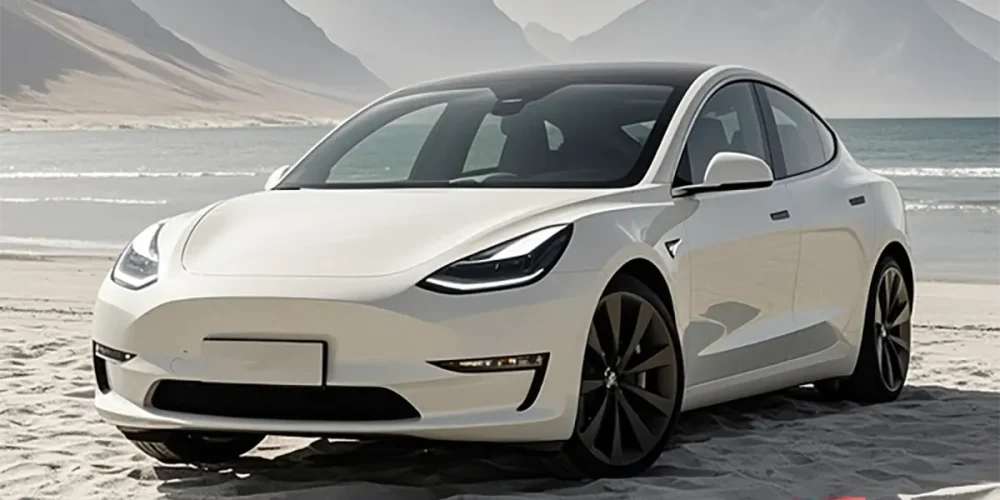
Why battery health, hardware generation, and warranty coverage matter more than the odometer on a used Tesla
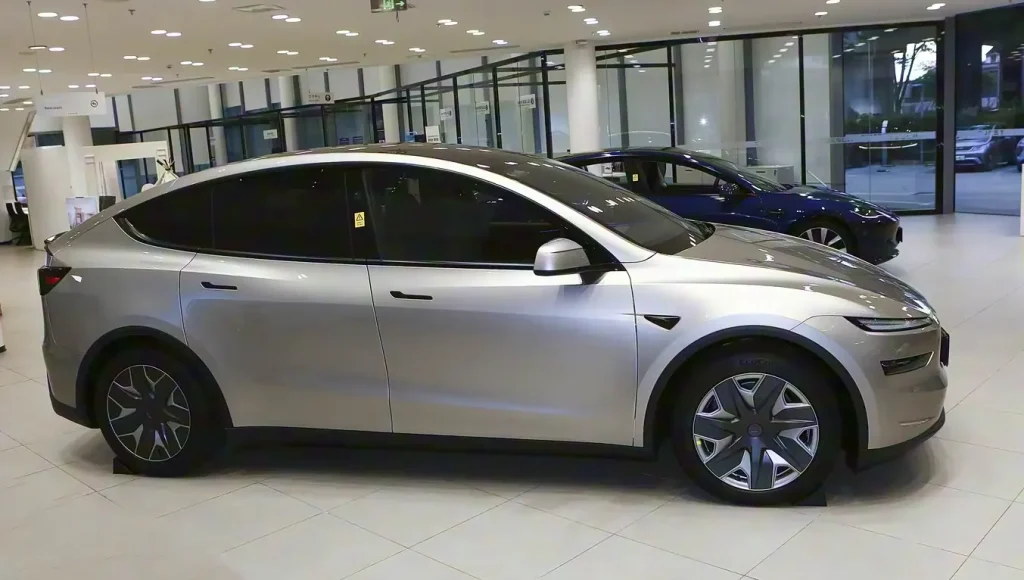
We’ve been conditioned by gas cars to expect disaster after 100,000 miles. But electric vehicles play by somewhat different rules. Does the mileage actually tell the whole story, or are we looking at the wrong numbers entirely?
So, does Tesla mileage really matter when buying a used Tesla, or is the odometer just an outdated habit from gas cars?
Let’s get into it…
Gas vs. Electric Odometer Compared
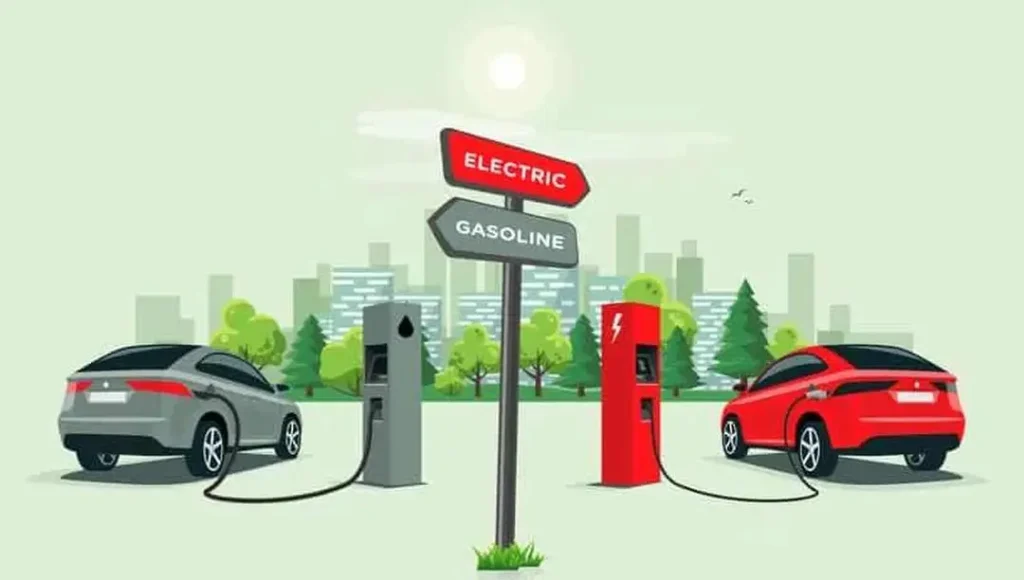
For most people, the odometer is the first thing they look at when browsing used car listings. It’s a habit. If you see 120,000 miles on a gas-powered car, your brain starts calculating the cost of a new transmission, timing belts, and head gaskets. But elsewhere in the EV world, those concerns barely exist.
You see, an internal combustion engine has about 2,000 moving parts.
And an electric motor? It has about 20. There are no explosions happening in the cylinders, no oil to change, and no complex exhaust systems to rust out.
Speaking of which, Tesla motors are actually engineered for a million-mile life cycle.
In general principles, the drivetrain is usually the last thing to fail on a Tesla. Arguably, a 100k-mile Model 3 is in better mechanical shape than a 100k-mile BMW 3 Series because it has not spent a decade vibrating itself to pieces.
Battery Health: The Definitive Metric

Now, having said that, we shouldn’t pretend that miles don’t affect the battery at all. But it’s not as straightforward as a one-to-one decline. Battery degradation follows a specific curve. Most of the loss happens in the first 20,000 to 50,000 miles, which is usually around 5% to 8%, and then it plateaus significantly.
Strangely, a car that has sat in a garage for three years with 5,000 miles on it might actually have a worse battery than one with 50,000 miles that was driven daily. This is because of “calendar aging.” Batteries like to be used. Well, they like to be used correctly.
Supercharging habits are the critical variable here. If a previous owner exclusively used DC fast chargers for 100,000 miles, that battery has been through a lot of thermal stress.
Better still, look for a car that was mostly charged at home on a Level 2 charger. Of these two scenarios, the high-mileage home-charged car is often the better bet. Hence, we would say that battery health (which you can check in the car’s settings) tells you way more than the odometer ever will.
When Mileage Actually Does Matter

But sometimes, people go too far and say “mileage does not matter at all” for EVs. That’s not true either. While the motor is bulletproof, the rest of the car is still, you know, a car. Teslas are heavy vehicles because of the battery packs, and that weight puts a massive strain on the suspension.
Particularly on older Model S and Model X units, you’ll want to check the control arms and bushings. If you hear a squeak when going over speed bumps, that’s a sign they’re ready to be replaced.
On top of that, you’ve got the 12V or 16V battery. It’s a small lead-acid or lithium-ion battery that runs the electronics, and it usually fails every 3-4 years regardless of how many miles you drive.
And don’t even get us started on tires. Because of the instant torque, Teslas eat through tires faster than your average sedan. If you’re looking at a high-mileage car, check the tread depth. Replacing a full set of specialized EV tires is not exactly cheap, probably around $1,200 or more. Somewhere along the line, those small maintenance items add up.
The Tech Year Trap
Long story short the year the car was built is often more important than the number on the dash.
Take a 2018 Model S with 30,000 miles versus a 2019 Model S with 80,000 miles. The 2019 car is arguably the better buy because it likely has the Raven upgrades. That means a more efficient front motor, better adaptive suspension, and a much smoother ride.
Then there’s the computer. A high-mileage Tesla with MCU2 (the newer infotainment computer) is a joy to use. A low-mileage car with the old MCU1 is going to feel like using a first-generation iPad. Slow, laggy, and prone to crashing. Better yet, check if the car has the Hardware 3.0 computer for Full Self-Driving. If it does not, you might be looking at a $1,000+ upgrade later on. That being said, always prioritize the hardware version over a few thousand extra miles.
Warranty Safety Nets
If you’re still feeling a bit nervous, remember that Tesla provides a quite solid safety net. The battery and drive unit warranty usually lasts for 8 years or up to 100,000 to 150,000 miles, depending on the model.
If you buy a used Tesla directly from their website, they often throw in an extra 1 year or 10,000 miles of bumper-to-bumper coverage once the original warranty expires. Albeit short, it’s enough to catch any immediate gremlins. Thus, if you find a car with 90,000 miles, you’ve still got some breathing room on the most expensive components.
Pro Tips for Inspecting a High-Mileage Tesla
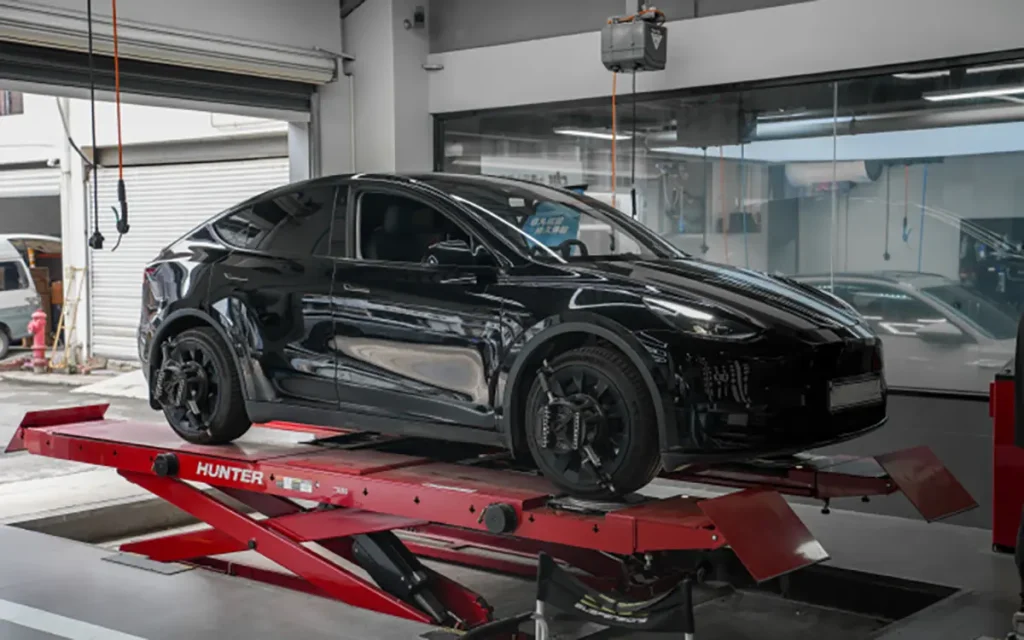
So, you’ve found a deal that looks too good to pass up. How do you verify it’s not a lemon?
First, use the Service Mode. It’s a hidden menu that lets you run a battery health test. It takes a while to complete, but it gives you a percentage of remaining capacity.
Also, look at the physical wear points. Check the door handles on older Model S units, if they’re notorious for failing. Look at the glass roof seals for any signs of lifting or leaks. And oddly enough, check the steering wheel. On very high-mileage cars, the material can start to peel or melt if the previous owner did not use a sunshade.
Anyway, back to the main point: the mileage. We’d say it’s the secondary metric when it comes to EVs, though that certainly doesn’t mean it’s not important. You’d still want to look at it, of course. However, as long as the car’s battery is still within that mileage warranty, the health report stays above 85%, and the suspension feels tight, we’d say that car has plenty of life left.
Closing Thoughts
In short, Tesla mileage matters far less than most buyers think — as long as battery health, warranty coverage, and hardware generation check out.
We need to shift our perspective. For decades, mileage was the primary metric we checked. It was the law of the land for gas-powered cars. However, in the case of a Tesla or any other electric vehicle, that has changed now. One should check the battery health as the primary metric.
Is mileage totally irrelevant? We are not saying it isn’t, but it’s certainly not the main event anymore. You’d be much better off checking the battery report and looking for signs of physical wear and tear. If the price is right and the battery report looks healthy, a high-mileage Tesla can be a fantastic way to join the electric revolution without the $50k price tag. Just keep a little cash on the side for those suspension bushings, you know?
Wait, did we mention the cabin filters? They always smell like old gym socks if they are not changed every two years. Anyway, make sure to swap those out immediately.
Finally, remember that your EV’s long-term health largely depends on how you charge it. Using unreliable third-party chargers can do real harm over time. Instead, always buy your gear from a reputable source like Duevolt. We have you covered with everything needed for EV charging—whether you need a portable EV charger for your Tesla (or any other EV), a full-fledged home station, or just the right accessories to keep things running smooth.
Albeit a high-mileage car, with the right tech and the right charging setup, you’re set for years to come.
Frequently Asked Questions
What is considered high mileage for a used Tesla?
100,000 miles is the psychological barrier, however, the true high-mileage mark, in our opinion, is wherever the battery warranty ends. For a Model 3 Long Range, that’s 120,000 miles. Once you’re past that, you’re flying without a net on the big-ticket items.
Does a battery replacement mean the car is worthless?
Actually, it’s the opposite. If a used Tesla has had a battery replacement under warranty, it’s arguably worth more. You’re getting a chassis with 100k miles but a fuel tank that’s brand new. That’s a win in our book.
How much range loss is normal after 100,000 miles?
You’ll probably see about 10-12% degradation. If the car had 310 miles of range when new, it’ll likely show around 275-280 now. For daily driving, you would not even notice.
Should I worry about the motor failing?
Neither the motor nor the gearbox fails very often. Unlike a gas car where the engine is a ticking time bomb of heat and friction, Tesla motors are extremely simple. Unless you hear a loud “whirring” or “clunking” sound during acceleration, it’s likely fine.