

Everything drivers need to know about connectors, charging speed, cost, and how DC Fast Charging works
The adoption of electric vehicle (EV) in the U.S. market is gaining momentum, creating a pressing demand to install charging infrastructure at a rapid pace. Although the majority of EV owners prefer overnight home charging, long-range travel and business activity require something much faster: Level 3 EV chargers.
Level 3 is also known as DC Fast Charging (DCFC), which is the highest level of the modern electric vehicle refueling system. The technique is essentially distinct from the slower Level 1 and Level 2 AC solutions. AC charging utilizes the car’s onboard converter, whereas a Level 3 station directly converts power from the grid into Direct Current (DC) within the charging unit. This high DC bypasses the car’s bottleneck and supplies high-voltage, high-amperage power to the battery.
In the U.S., the DC Fast Chargers range is generally 50 kW and up to 350 kW or higher. This vast power allows for adding 60-80 miles of range within 20 minutes, depending on the vehicle and the charger’s power. With the changing situation in the U.S., the charging station status quo is shifting, and Level 3 chargers have become a necessity for highway transportation and metropolitan areas where rapid turnaround is the most critical factor.
1. The Science of Speed: Why Direct Current is King
To fully appreciate the speed of a Level 3 EV charger, it is helpful to understand the distinction between AC and DC power.
The power supplied by the local electricity grid in the U.S. is practically all AC power, yet your EV battery can only store energy in the form of DC power.
- Level 1 and Level 2 (AC): Power is delivered as AC and converted to DC by the car’s onboard charger. This conversion limits the speed to protect the battery and manage heat.
- Level 3 (DC): The powerful, external charging station handles the AC-to-DC conversion before the power reaches the vehicle. This allows for a much faster, higher-voltage transfer (typically 400V to 800V systems), resulting in the “rapid” charging speeds the technology is known for. This external conversion is the core reason why DC Fast Charging is exponentially faster than any AC solution.
2. U.S. Charging Standards: Navigating the Connectors
When seeking out a Level 3 EV charger in the U.S. market, drivers must be aware of the connector standards. At the same time, the underlying technology is DC Fast Charging; the physical plug used varies, which is central to the current U.S. charging station status quo.
2.1. Combined Charging System (CCS1): This has been the dominant standard for most major non-Tesla automakers (Ford, GM, VW). The CCS plug is versatile, combining pins for both AC and high-power DC charging. Its widespread initial adoption made it the primary choice for early federally funded infrastructure projects.
2.2. CHAdeMO: Developed by Japanese automakers like Nissan and Mitsubishi, CHAdeMO is a DC-only charging plug. While common in earlier DC Fast Charging networks, its presence is now declining significantly in new U.S. installations.
2.3. North American Charging Standard (NACS): Developed by Tesla, NACS is the new industry leader. It features a single, compact plug that supports both AC and high-power DC charging. Following Tesla’s decision to open the standard, nearly every major automaker has announced plans to adopt NACS in their vehicles starting in 2025. This transition is making NACS the likely long-term standard for DC Fast Charging in the U.S. market.
3. The Fast Charge Reality: Benefits and Trade-offs
The adoption of DC Fast Charging is driven by its compelling benefits, but it also introduces practical considerations.
Core Benefits
The primary advantage is speed. The capability to charge more than 100 miles of range in under 30 minutes is revolutionary for long highway distances, commercial fleets, and urban users with no home charging station. It is the secret to overcoming the phenomenon of range anxiety and the possibility of owning an EV in any driving situation.
Drawbacks and Battery Health
One of the concerns is how regular DC Fast Charging affects the battery life. Although high power rates have the potential to produce heat, current EVs are designed with advanced battery management systems to mitigate this phenomenon. Studies suggest the overall impact on degradation is minimal for most drivers, but it is generally recommended to charge only up to 80% at a Level 3 station to maximize speed and minimize strain on the battery cells. ( Source: Scientists Reveal how EV Fast Charging Impacts Battery Health)
4. Finding a Level 3 EV Charger
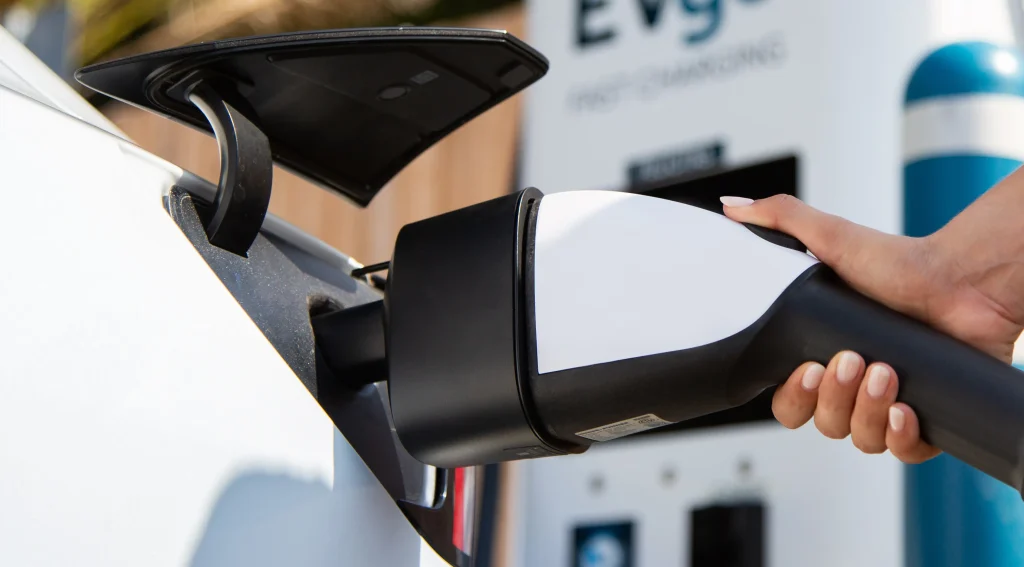
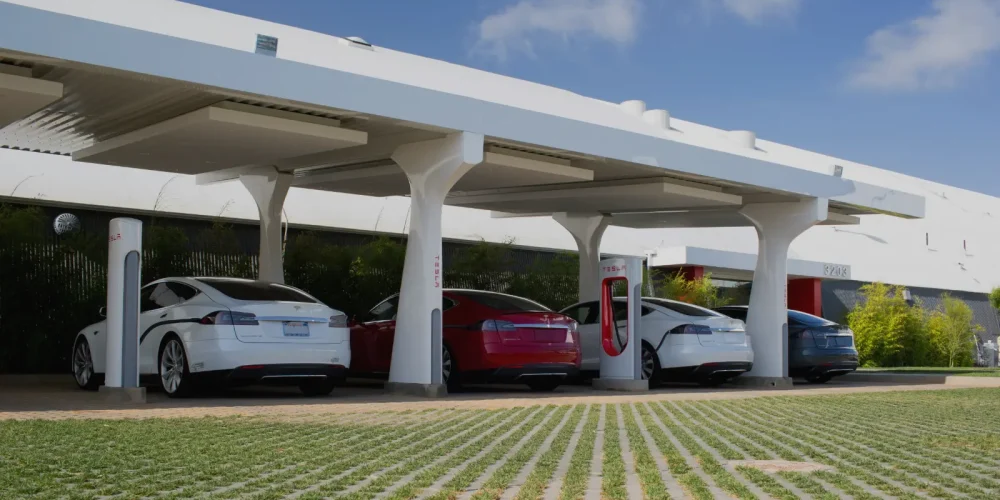
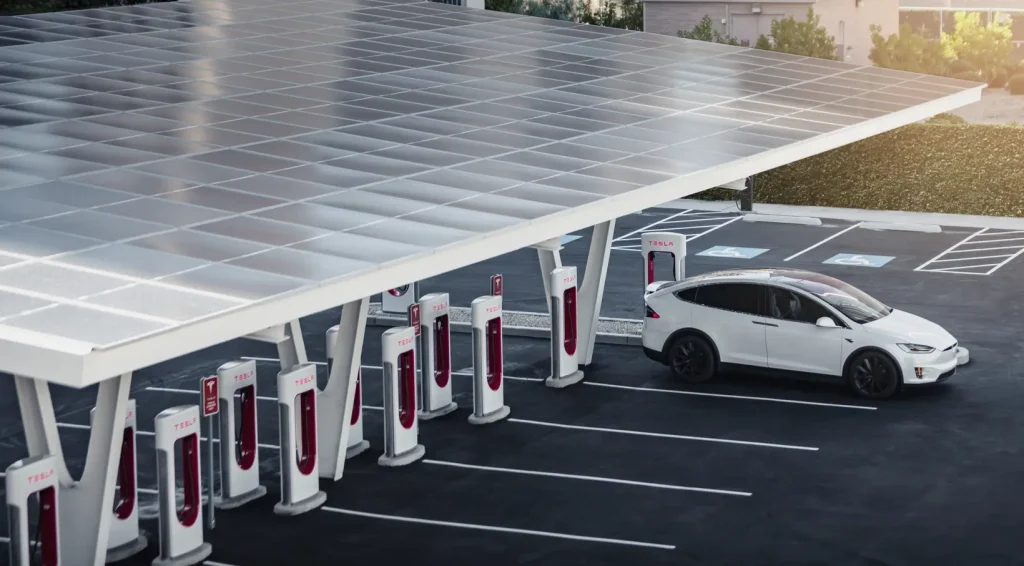
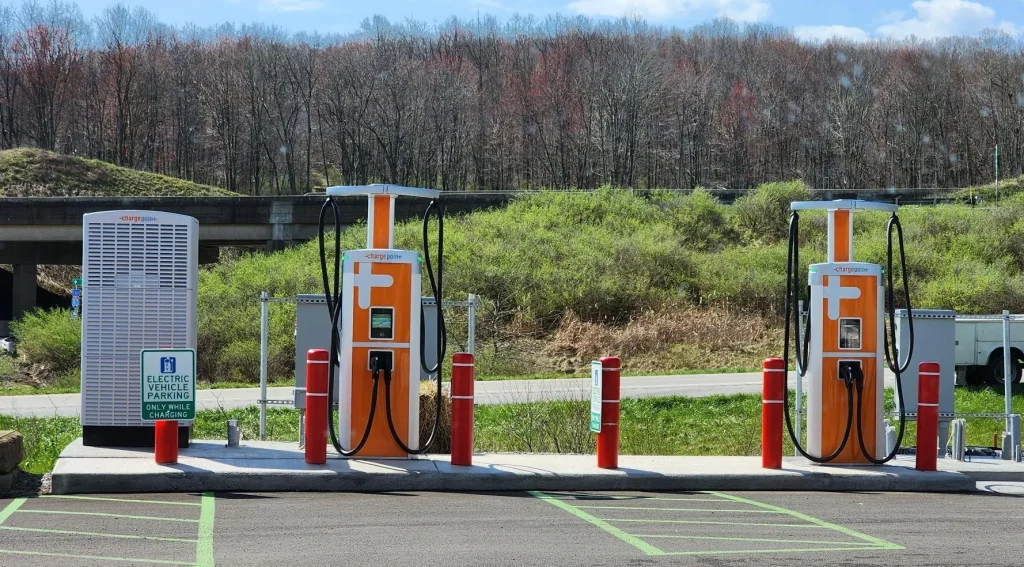
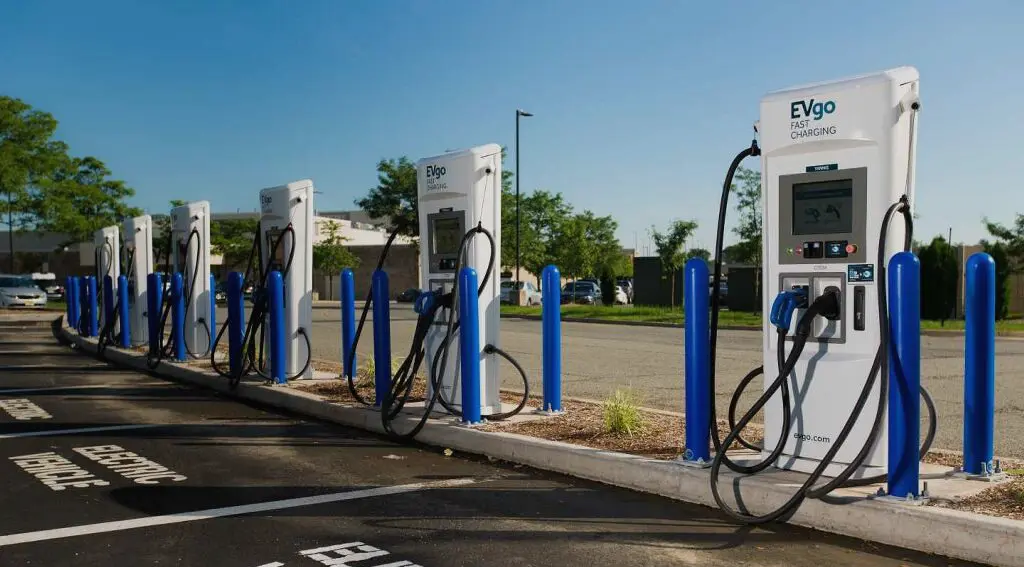
With the rapid expansion of the U.S. charging station status quo, finding a Level 3 charger is easier than ever. Major networks such as Tesla Supercharger, Electrify America (EA), EVgo, and ChargePoint continue to expand rapidly, especially along major highways and high-traffic commercial corridors. The U.S. Department of Energy’s Alternative Fuels Data Center offers an up‑to‑date map that displays all available DC Fast Charging stations, including their locations and connector types.
You can also use tools like PlugShare or the official Tesla Supercharger map to locate nearby charging stations before starting your trip. However, it’s important to know whether you are looking for a CCS station or a Tesla Supercharger, because different networks use different plug standards.
If your EV uses a CCS fast‑charging port, you will need a NACS‑to‑CCS adapter to charge at Tesla Supercharger stations that support third‑party vehicles. Conversely, if you drive a Tesla, you can charge not only at the extensive Supercharger network but also at CCS fast‑charging stations using a CCS‑to‑NACS adapter, giving you access to a much wider range of charging options across the U.S.
5. Embracing the Future of EV Refueling
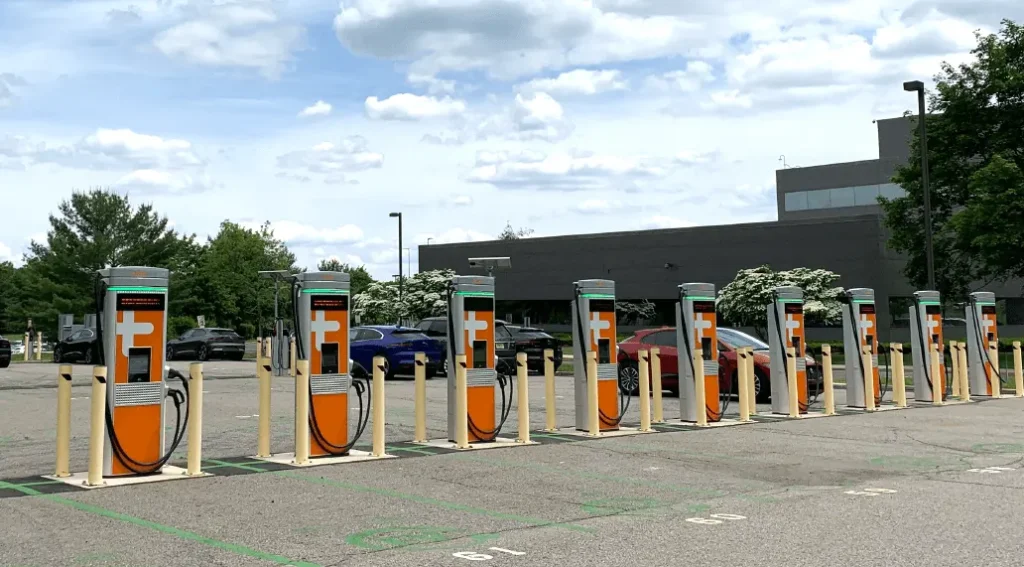
The Level 3 EV charger is a key to the extensive adoption of electric mobility in the U.S. The fact that it can recharge batteries in a short time is a significant obstacle that the EV skeptics have not overcome. Whether you’re a personal traveler planning a cross-country trip or a business intending to install high-speed infrastructure, the first thing you should know about DC Fast Charging is that it is the key to electrifying your future. To understand the full landscape of EV charging solutions, you can also explore our complete guide to EV chargers: Complete Guide to EV Chargers.
FAQs About Level 3 EV Charging
1. How long does it take to charge an EV at a Level 3 station?
Charging time varies by vehicle and charger power, but most EVs take 15–30 minutes to charge from 10% to 80% on a DC fast charger. High-power units (150–350 kW) can add 100–200 miles in under 20 minutes. Older EVs or low-temperature conditions may extend this time.
2. Does Level 3 DC fast charging damage the battery?
Modern EVs are designed to handle DC fast charging safely. While frequent Level 3 use may slightly increase long-term battery wear, Battery Management Systems (BMS) regulate temperature and voltage to reduce degradation. For best results, many manufacturers recommend limiting fast charging to 80% except when needed for long trips.
3. How much does Level 3 charging cost in the U.S.?
On average, Level 3 charging costs $0.30–$0.55 per kWh, depending on location and network. A typical DC fast charging session costs $20–$35. Some networks add idle fees, session fees, or peak-hour surcharges, making fast charging more expensive than home charging.
4. Can all EVs use Level 3 charging?
Most fully electric vehicles support Level 3 DC fast charging, but plug-in hybrids (PHEVs) generally cannot. Additionally, connector compatibility varies among CCS1, CHAdeMO, and NACS. Drivers should verify their vehicle’s compatible DC fast-charging plug.
5. Is Level 3 charging available everywhere?
Coverage is improving rapidly, especially due to the U.S. NEVI program, which requires at least four 150 kW+ chargers per site. Level 3 is widely available along major highways and metro areas but may be limited in rural regions. Apps like PlugShare and the DOE’s station locator help drivers find chargers easily.