

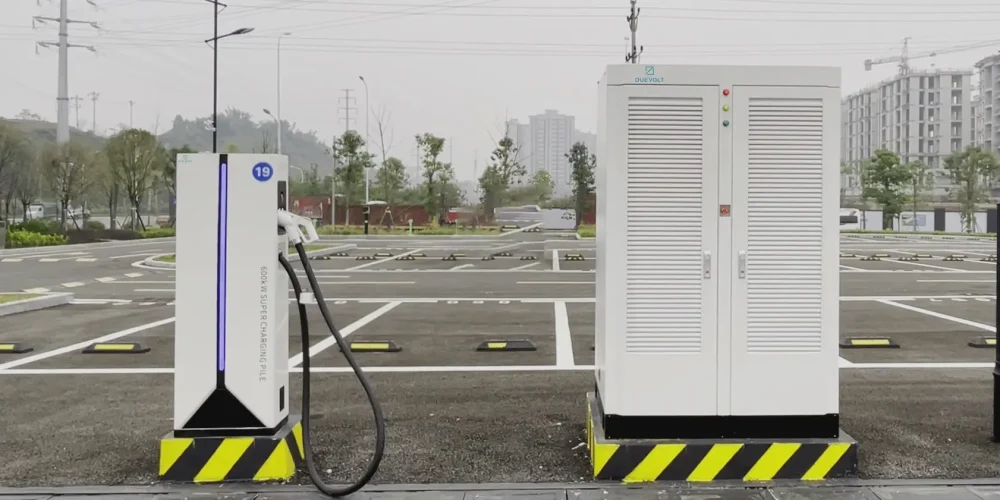
Everything You Need to Know About Commercial EV Charger Installation Cost, Planning, and Infrastructure Requirements
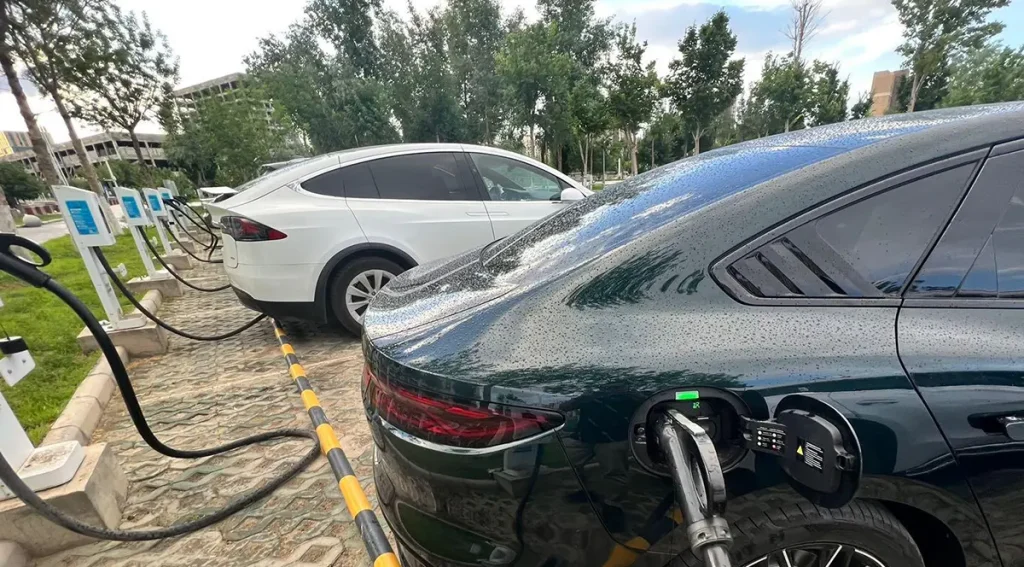
As you explore the commercial EV charging station installation process, understanding both the technical and financial considerations—including the overall commercial EV charger installation cost—is essential for proper planning.
The demand for EV charging at commercial properties is exploding. In fact, according to the ChargePoint, the number of workplace charging sessions increased by 64%.
Commercial ev charging station installation is, to our eyes, one of the smartest moves a business can make to future proof its property. However, the process, the hardware choices, and, in particular, the costs can seem overwhelming.
This guide provides a professional, no-nonsense breakdown of the entire process.
We’ll cover everything from initial planning and hardware selection to the bottom-line cost, giving you the practical, actionable info you need.
1. The Business Case for Commercial EV Charging Station Installation
Adding EV chargers is not just a nice-to-have amenity anymore. It’s rapidly becoming a competitive necessity. The properties that wait, you know, they might just get left behind.
The business case is strong. In fact, the benefits go well beyond a single line item.
● Attract High-Value Customers & Tenants: EV drivers are a desirable demographic. For retailers, they tend to stay longer and spend more while their car charges. For multi-family or office properties, chargers are a high-demand perk that can command premium rents.
● Employee Attraction & Retention: A workplace charging program is a powerful and visible benefit, particularly for retaining top talent who have already made the switch to electric.
● Fleet Electrification: For businesses with their own vehicles, installing on-site chargers is not an option, it’s a core component of a fleet transition, critical for managing operational costs.
● New Revenue Streams: You can (and often should) charge for charging sessions, creating a direct, new source of revenue from your parking spots.
● Meet Sustainability Goals: Looking to boost your brand image or ESG (Environmental, Social, and Governance) report? Public-facing EV chargers are one of the most visible ways to demonstrate your commitment to sustainability.
Honestly, as EV adoption continues to curve sharply upwards, the cost of inaction could very well be higher than the cost of investment.
2. Choosing Your Hardware: Level 2 vs. DC Fast Charging
When evaluating your commercial EV charging station installation plan, hardware selection plays a critical role in determining project scope, timelines, and long‑term operating costs.: Level 2 vs. DC Fast Charging.
This is the first major decision, and it dictates, well, pretty much everything, from your budget to your customer experience.
2.1 Level 2 (AC) Charging
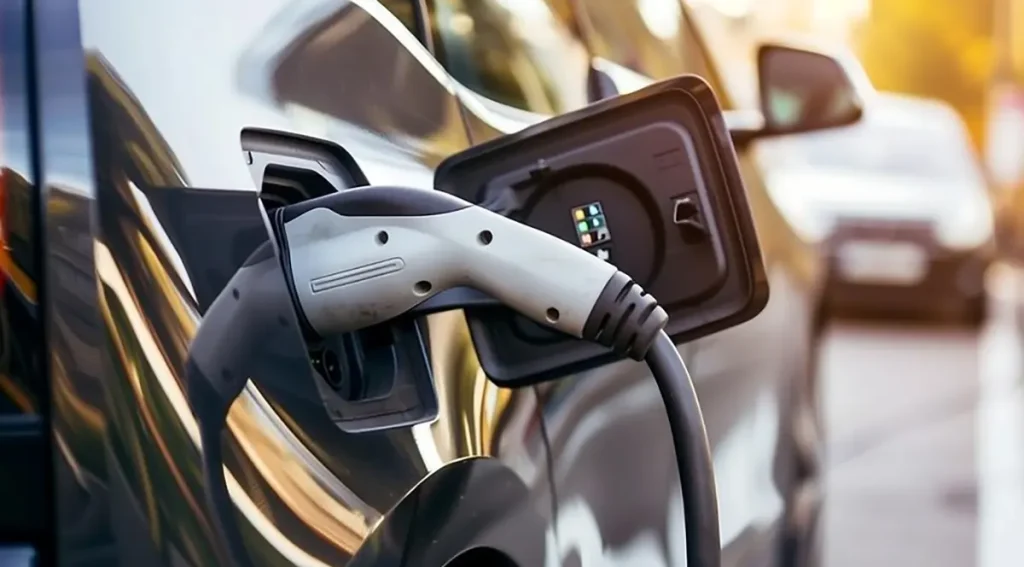
In laymen’s terms, this is the workhorse charger. It’s the same type of charging most EV drivers use at home. It provides AC (Alternating Current) power, and the car’s onboard charger converts it to DC (Direct Current) to fill the battery.
● Best For: Locations where cars are parked for two hours or more. Think workplaces, multi-family housing, hotels, and retail centers or restaurants where you want customers to linger.
● Cost: Significantly lower upfront hardware and installation cost.
● Installation: Generally simpler. It requires a 240V circuit, similar to a commercial dryer.
2.2 DC Fast Charging (DCFC)
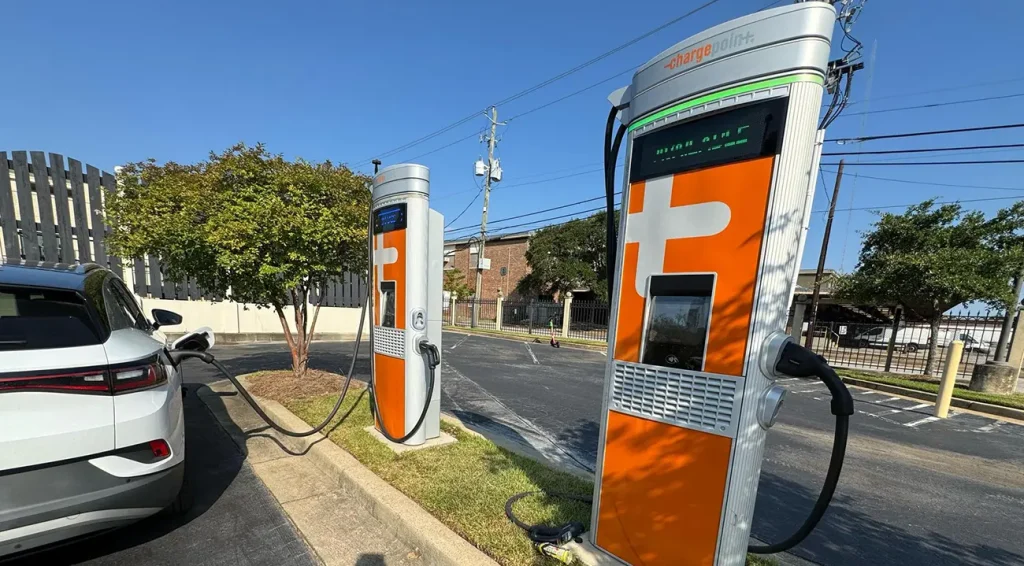
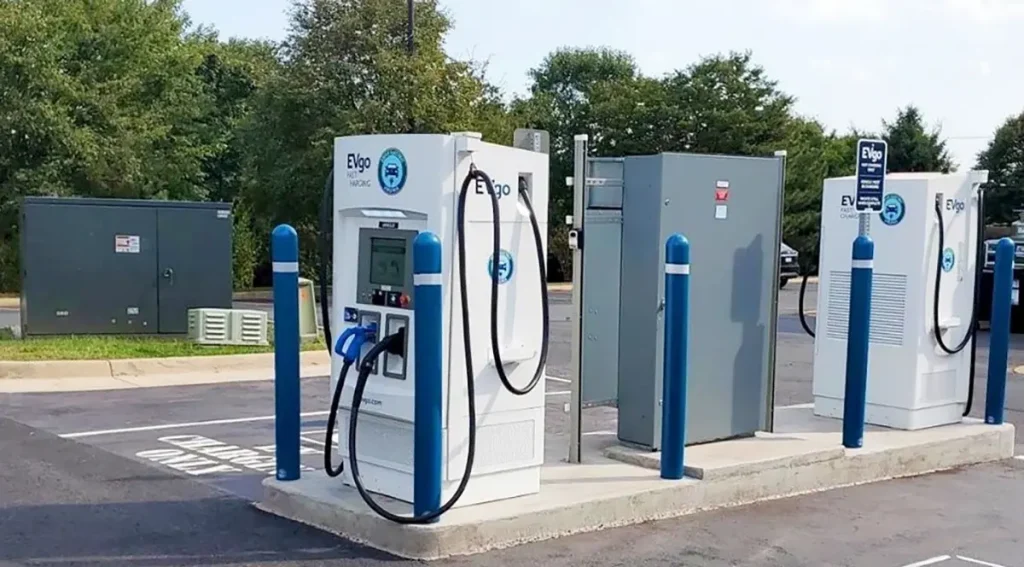
In laymen’s terms, this is the gas station equivalent. These chargers are the big, powerful units you see along highways. They bypass the car’s onboard charger and feed high-voltage DC power directly to the battery, allowing for an incredibly fast charge, often 20-40 minutes instead of several hours.
● Best For: Quick-turnaround locations. This includes public charging plazas, fleet depots where vehicles need to get back on the road, and highway rest stops or convenience stores.
● Cost: The hardware and installation costs are in a completely different league. They are much higher.
● Installation: Highly complex. DCFC units often require 480V 3-phase power, which most buildings do not just have lying around. This means significant utility coordination, potential transformer upgrades, and, frankly, a lot of planning.
The Verdict: It’s not always an either/or scenario. Many properties, particularly larger ones, find success with a mix. Level 2 chargers for the bulk of their spots and perhaps one or two DCFC units for top-offs or public use.
3. The Commercial EV Charging Station Installation Process: A Practical Step-by-Step
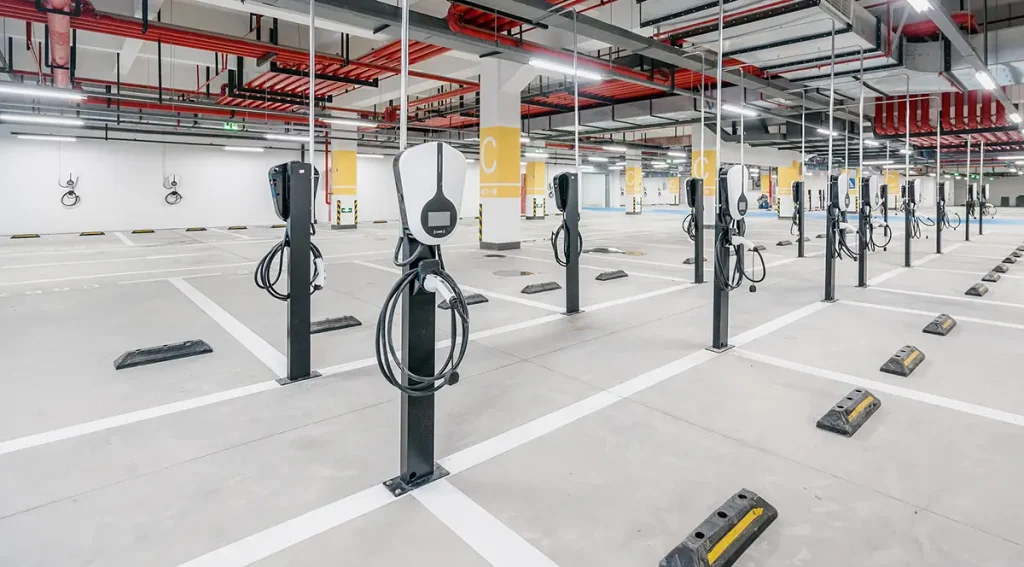
A well‑structured installation plan is key to managing your overall commercial EV charger installation cost and reducing unexpected expenses.: A Practical Step-by-Step
This is where the rubber meets the road. And honestly, planning is 90% of the battle. Rushing this part is the number one mistake we see.
Step 1: Site Assessment & Feasibility
A professional site audit is non-negotiable. An installer or engineer needs to get eyes on your property to answer key questions:
● What is your current electrical capacity?
● Is your main panel full?
● Where, physically, will the chargers go?
● What are the trenching and conduit requirements to get power to those spots?
This assessment is where you’ll get your first real ballpark figure, rather than a wild guess.
Also Read: Understanding The Difference Between Level 1 And Level 2 EV Chargers
Step 2: Design, Engineering, & Permitting
Do not skip this… Once you have a plan, it needs to be engineered. This involves professional load calculations (so you don’t, you know, take down your building’s power) and creating schematics that your city will require for permits.
Speaking of which, permitting can be a major bottleneck. Starting this process early is well worth the effort, as it can take weeks or even months in some jurisdictions.
Related: A Complete Guide On EV Charger Permit
Step 3: Utility Coordination
This is a big one, particularly for DC Fast Charging. You (or your contractor) will need to talk to your local utility. They have to approve the plan and may need to schedule significant work, like installing a new transformer, to provide the power your project demands. This process alone can take a long time.
Step 4: The Physical Installation
This is the part you’ll actually see. It involves the dirty work: trenching to bury conduit, running that conduit from the panel to the parking spots, perhaps pouring small concrete pads for the chargers, and finally, mounting the hardware.
Step 5: Software & Network Setup
The last step is commissioning. The chargers are hooked up to the final electrical connections and powered on. Then, they are connected to a software network (e.g., ChargePoint, EVConnect) to get them online. This is what allows you to manage access, set pricing, and track usage.
4. Breaking Down the Costs: What You’ll Actually Pay For
4.1 What Drives the Cost of a Commercial EV Charger Project?
So, let’s get down to brass tacks. Before looking at the actual dollar figures, it’s important to understand why commercial EV charging projects vary so dramatically in cost. In many cases, the underlying electrical infrastructure—not the charger itself—drives the biggest portion of your budget. The all-in price tag for a commercial installation is a composite of several key components. The hardware, strangely, is often not the biggest piece of the pie.
| Cost Component | Level 2 Impact | DC Fast Charger Impact | Why It Matters |
|---|---|---|---|
| Electrical Capacity | Moderate | Very High | DCFC requires 480V 3‑phase power and often transformer upgrades. |
| Trenching & Conduit | Medium | High | Long distances and concrete work significantly increase installation cost. |
| Permitting & Engineering | Low–Medium | High | DCFC needs detailed engineering drawings and utility approval before installation. |
| Networking | Low | Medium | DCFC systems incur higher networking and management costs. |
| Utility Upgrades | Rare | Common | Many DCFC sites require upgraded service, switchgear, or new transformers. |
4.1.1 Hardware
So, how much does a commercial ev charging station cost?This is the cost of the charger itself. For a commercial-grade, networked Level 2 charger, you can expect to pay anywhere from $2,000 to $7,000 per port. For a DC Fast Charger, the hardware cost is dramatically higher, ranging from $30,000 to over $100,000 depending on its power output.
Transformer Requirements and Power Availability Considerations
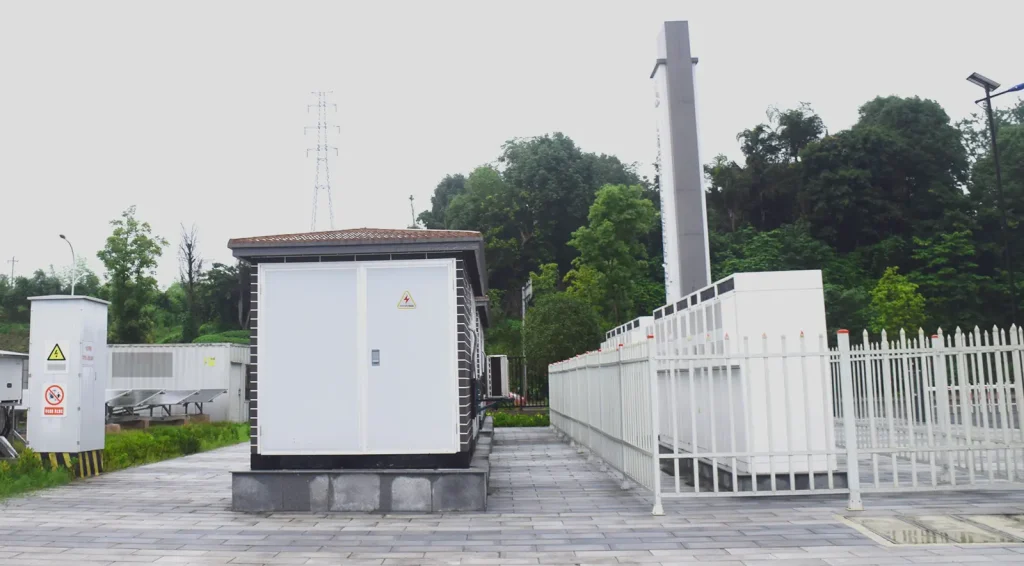
In some cases, the chosen site may not have sufficient electrical capacity to support your planned EV charging deployment. When this happens, the project may require a dedicated transformer upgrade, which can significantly increase total installation cost.
For example, if you’re installing 20 Level 2 commercial chargers, each rated at 11.5 kW, your charging site must support approximately 230 kW of load. If your hotel or facility cannot provide that much capacity from its existing electrical service, you may need to install a dedicated 290 kVA transformer. This not only supports the current load but also provides buffer capacity for future expansion. A transformer of this size typically costs $7,000–$30,000.
Similarly, if you plan to build a small DCFC station with four 160 kW Level 3 ev chargers, the site must support roughly 640 kW of power. If the utility cannot supply that capacity, a 1,000 kVA transformer may be required to power the station and allow for future growth. These larger transformers can range from $30,000–$200,000, making them one of the most expensive components of a commercial charging project.
The takeaway: When selecting a location for your EV charging project, always confirm whether the utility can supply the necessary electrical capacity. If not, transformer upgrades can dramatically increase your total project cost.
4.1.2 Installation
This is the big variable and the number that most often surprises people. It includes all labor, permitting fees, electrical panel upgrades, transformers, and, most of all, trenching.
If your chargers are 500 feet from your electrical room and you have to cut through concrete, that’s a major cost. We’d say it’s common for these soft costs to be 1-3x the cost of the hardware, particularly for DCFC projects.
4.1.3 Networking & Software
Smart, networked chargers require an annual subscription fee to stay connected. This is an ongoing operational expense, typically a few hundred dollars per port, per year.
4.1.4 Maintenance
These are not set it and forget it machines, at least not entirely. You’ll want to factor in the cost of warranties and potential service plans to ensure your investment stays online and earning revenue.
Before looking at specific price ranges, it helps to translate all the variables we’ve just discussed into something more concrete. The following comparison table provides a clear, side‑by‑side view of what different types of commercial EV chargers typically cost—both in hardware and installation. This makes it much easier to understand how charger type, power level, and site conditions ultimately shape your total project budget.
4.2 commercial ev charger installation cost Comparison (Typical Ranges)
| Charger Type | Hardware Cost (Per Port) | Installation Cost | Total Typical Project Cost | Best For |
|---|---|---|---|---|
| Level 2 (AC) | $2,000–$7,000 | $3,000–$10,000 | $5,000–$17,000+ | Workplaces, hotels, retail, apartments |
| DC Fast Charger (50–180 kW) | $20,000–$100,000+ | $40,000–$150,000+ | $60,000–$250,000+ | High‑turnover sites, fleets, travel plazas |
| High‑Power DCFC (180–350 kW) | $120,000–$300,000+ | $150,000–$400,000+ | $250,000–$700,000+ | Highway corridors, EV hubs |
5. Rebates & Incentives
This is critical for your ROI. Before you spend a dime, do your homework on available incentives.
There’s the federal 30C Tax Credit, which can be very generous.
On top of that, many states, local municipalities, and, in particular, utility companies offer their own rebate programs.
These programs can sometimes be stacked and could cover a significant portion of your project cost.
That being said, they all have specific rules, applications, and deadlines, so this research is well worth your time.
6. In Closing
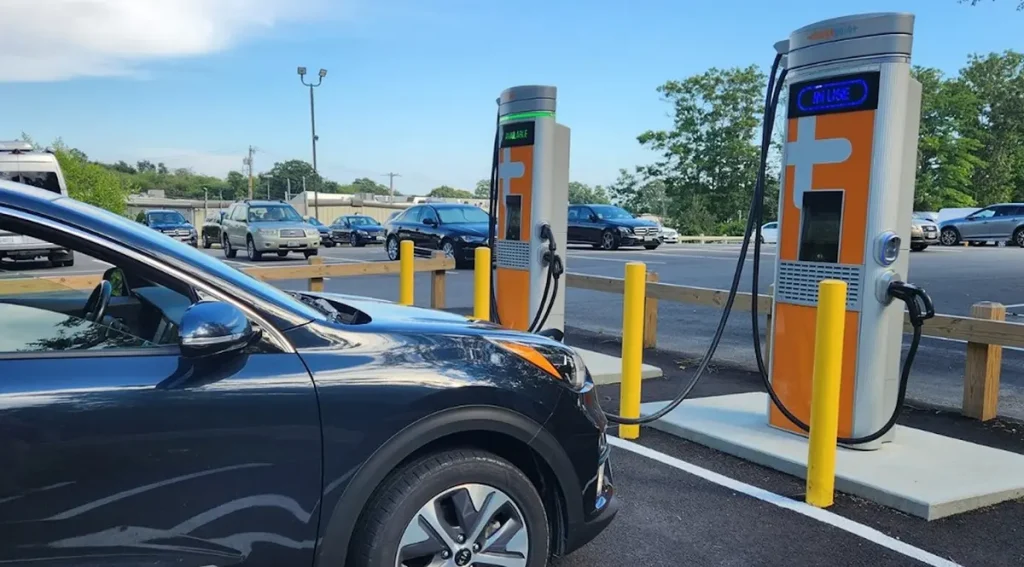
The upfront cost for a commercial EV charging project is significant, albeit highly scalable. You can start with just one or two chargers and expand later.
The benefits, however—from customer attraction and employee retention to new, direct revenue—are tangible and growing every day. With smart planning, a clear understanding of the costs, and a good strategy to leverage incentives, installing chargers is not just an expense. It’s an investment in your property’s future.
FAQs (Frequently Asked Questions)
How long does a commercial EV charger installation take?
Honestly, it varies widely. For a simple Level 2 install, perhaps a few weeks from planning to completion. For a complex DCFC project requiring utility upgrades, it could be 6-12 months. Planning and permitting are the longest poles in the tent.
Can I set my own prices for charging?
Yes, absolutely. Modern networked chargers (the kind you should be installing) give you full control. You can set pricing by time, by kWh, or offer it as a free amenity. This flexibility is key to managing your ROI.
What’s the biggest hidden cost in commercial installation?
We would say it’s trenching and electrical service upgrades. If your electrical panel is full, or if the chargers are far from the panel, the cost to run new conduit and upgrade your service can be a major, and sometimes shocking, expense. A thorough site assessment is the only way to know for sure.